Top 5 American Mahjong Tile Manufacturers: A Sourcing Guide for Brands
September 28, 2026
Read:1
Source: Dongguan XingfenglinAcrylic Products Co., Ltd
This guide compares five American Mahjong tile manufacturers from the perspective of manufacturing capabilities and project fit, while also covering the practical factors that brands should consider before choosing a production partner.
What Should You Look for in an American Mahjong Tile Manufacturer?
Not every Mahjong factory is equally suited to American-style sets. The real difference appears in how well a supplier handles the set structure, acrylic construction, original artwork and production details that define the finished collection.
1. Experience With American Mahjong Configurations
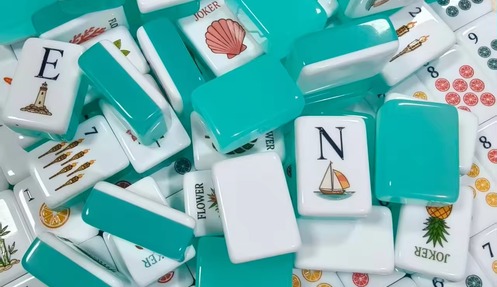
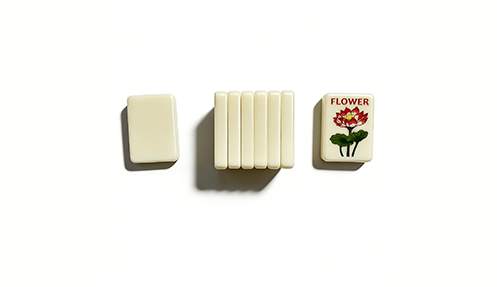
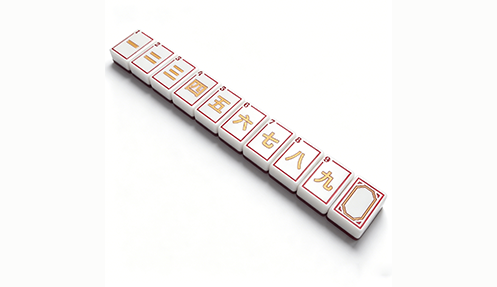
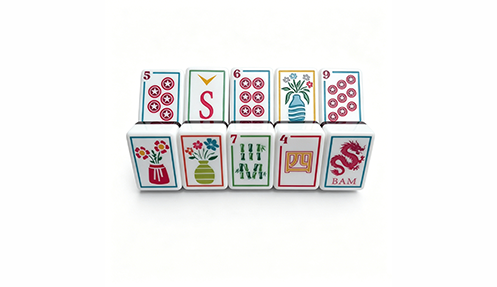
American Mahjong involves more than changing the artwork on a conventional set. Dots, Bams, Craks, Winds and Dragons may be joined by Flowers, Jokers and spare tiles, with the final count varying by collection. Symphony Acrylic works with 152, 160 and 166-tile configurations and can adjust the combination to supplied requirements. This matters for brands creating their own Joker series, special Flowers or non-standard tile assortments, where the set needs to be planned around the artwork from the beginning.
2. Material and Tile Construction
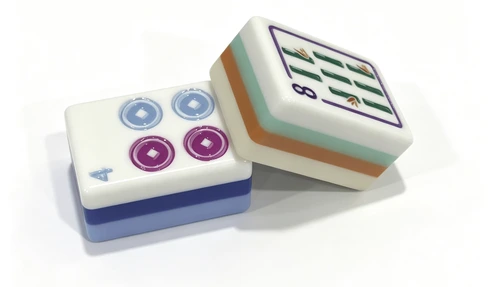
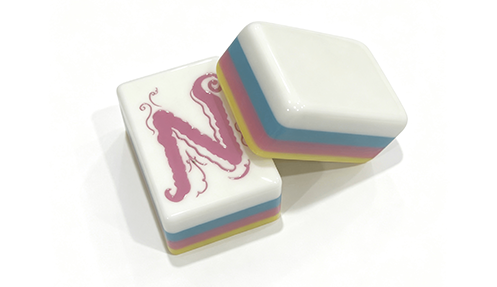
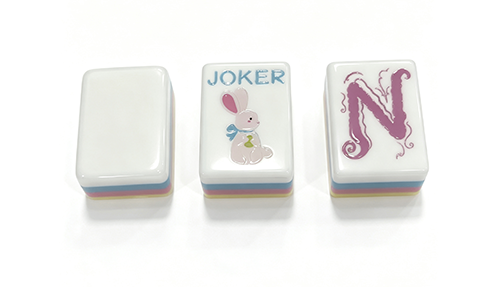
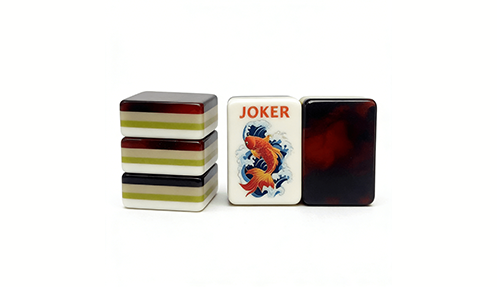
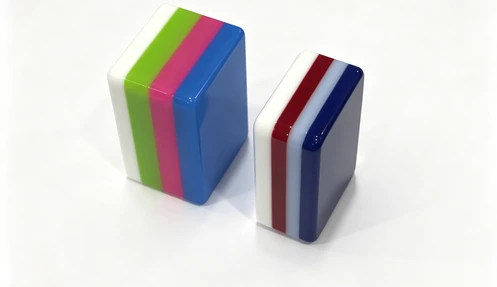
Two acrylic sets can look noticeably different even when their dimensions are identical. PMMA color, opacity, thickness and the way layers are combined all influence the depth and character of a tile. Symphony Acrylic works with PMMA in single- and multi-layer constructions, including different colors and patterned designs. For collections built around a distinctive visual style, the acrylic structure itself is part of the design rather than simply the base material.
3. Artwork and Decoration
Original artwork needs a production method that preserves the intended detail. Engraving with color filling creates a different finish from direct printing, particularly on fine lines, illustrated Jokers and detailed Flower tiles. Tile backs and layered acrylic can introduce another visual element without crowding the face design. Matching the artwork to the right process early helps preserve its character when moving from a digital file to a physical tile.
4. MOQ and Sampling
Order quantity becomes more meaningful when considered together with the complexity of the design. A straightforward construction and a multi-layer set with original artwork and branded packaging do not carry the same production requirements. For a new collection, a physical sample is therefore useful for resolving practical details such as acrylic color, thickness, engraving depth, printed details and hand feel before those choices are carried into the full batch.
5. Dimensional and Batch Consistency
Small variations become surprisingly visible when Mahjong tiles are arranged side by side. Uneven dimensions, shifted patterns, inconsistent polishing or poorly aligned acrylic layers can affect the appearance of an entire set. Symphony Acrylic specifies a ±0.05 mm dimensional tolerance for its acrylic Mahjong production, while pattern positioning, surface finishing and layer bonding are also relevant inspection points. These details become particularly important when the same design will return for later production runs.
6. Packaging and Set Components
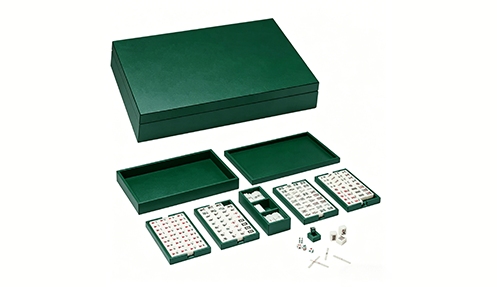
The box should be developed around the finished set rather than treated as an afterthought. Tile count, dimensions, racks, pushers and other components determine the internal layout and overall package size. A 166-tile collection with accessories may require a very different structure from a compact 152-tile set. Finalizing these components together makes it easier to create packaging that fits the product properly without unnecessary empty space or late-stage changes.
American Mahjong Manufacturer Comparison
The most useful comparison is not simply which manufacturer offers the lowest price. Buyers should consider material specialization, customization depth, MOQ, accessories and the type of project each factory is structured to support.
| Manufacturer | Main Direction | Materials | Custom Artwork | MOQ Approach | Project Focus |
|---|---|---|---|---|---|
| Symphony Acrylic | Custom acrylic Mahjong manufacturing | PMMA acrylic | Yes | Custom projects from 50 sets | Custom acrylic and branded collections |
| JAYI Acrylic | Acrylic OEM/ODM manufacturing | Acrylic | Yes | Published custom bulk MOQ from 300 sets | Larger acrylic private-label programs |
| MALADA | Custom Mahjong manufacturing | Acrylic, resin, melamine | Yes | Depends on product specification | Tiles, sets and accessory programs |
| Mahjo Studio | Private label / OEM / ODM | Acrylic, melamine | Yes | Project-specific quotation | Retail and private-label programs |
| WINSKILL | American Mahjong custom and wholesale | Acrylic-focused | Yes | Custom projects from 50 sets | Smaller custom and branded collections |
Top 5 American Mahjong Tile Manufacturers
A useful manufacturer comparison should look beyond tile styles and customization menus. Production background, engineering support, manufacturing depth, order flexibility and the ability to manage a product from sample to repeat production can matter just as much as the finished design. The five manufacturers below take noticeably different approaches to American Mahjong production.
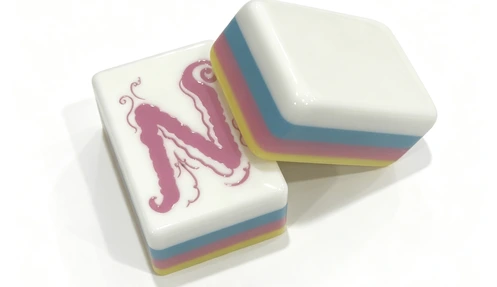
1. Symphony Acrylic — Custom Acrylic American Mahjong Tile Manufacturer
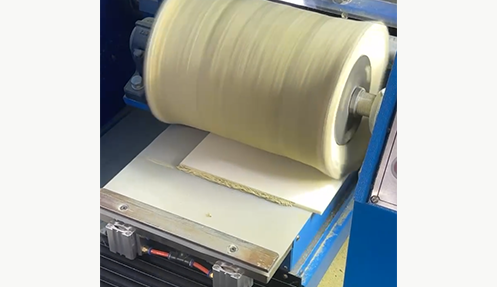
Symphony Acrylic brings 18 years of acrylic manufacturing experience to American Mahjong production, backed by more than 100 precision processing machines. CNC machining, laser processing, engraving, UV printing and polishing are integrated into its manufacturing workflow, giving the factory greater control over designs that require changes to the tile itself—not just new graphics on an existing format.
The tiles are made from PMMA acrylic, with single-, two- and multi-layer constructions available. Set configurations include 152, 160 and 166 tiles, while dimensions, acrylic colors, faces and backs can be adapted to the design. Original Flowers, Jokers and other illustrated tiles can be produced through engraving with color filling or printing, leaving room for collections with their own artwork rather than conventional Mahjong graphics.
Custom production starts from 50 sets, and one-set sampling is available before a larger order. For designs involving layered acrylic or carefully matched colors, the sample becomes a practical reference for checking how the digital concept translates into the finished material. Keeping key processing steps in-house is also valuable when the same collection returns for another production run and needs to remain close to the approved version.
The difference is most noticeable with more demanding designs. A multi-layer tile with contrasting acrylic colors, an illustrated face, a custom back and non-standard dimensions requires much more coordination than applying a logo to a ready-made set. Themed collections, artist-designed sets, original Flower and Joker series, unusual tile formats and other complex private-label projects are therefore a natural fit for Symphony Acrylic's acrylic-focused manufacturing capabilities.
2. JAYI Acrylic — Acrylic OEM/ODM Manufacturing
JAYI Acrylic comes from the wider acrylic fabrication industry, and that background carries into its Mahjong production. American-style sets can use single- or multi-layer acrylic, with engraving, color application and UV printing available for transferring artwork onto the tiles. Rather than relying on one decorative process, the production route can change with the visual requirements of the design.
Published options include 160- and 166-tile configurations, together with adjustable colors, dimensions, artwork and packaging. These capabilities leave room for collections built around layered acrylic, detailed graphics or a consistent visual theme extending from the tiles to the box. The emphasis is less on supplying an off-the-shelf set and more on turning an established design into a repeatable acrylic product.
A published 300-set MOQ for fully customized bulk production also gives JAYI a different production profile from lower-volume suppliers. That threshold is more aligned with established brands, planned retail releases and projects whose artwork has already moved beyond the testing stage. Its acrylic fabrication base and larger custom order structure are particularly relevant when a collection is ready to move from product development into a defined commercial run.
3. MALADA — Multi-Material Mahjong Sets and Accessories
Where many suppliers concentrate heavily on acrylic, MALADA works across acrylic, resin and melamine. The choice matters because material changes more than appearance: weight, feel, decoration possibilities and overall product positioning can shift considerably between constructions. A buyer that has not yet fixed the material can explore several directions without rebuilding the sourcing process around another supplier.
The tiles are only one part of MALADA's offering. Racks, pushers, mats, bags and custom packaging can sit within the same program, supported by processes including machining, engraving, printing, color filling, polishing and assembly. A collection with customized tiles, coordinated accessories and its own packaging can consequently be developed as a complete set rather than a group of unrelated components.
That breadth also means there is little value in reducing MALADA to one headline MOQ. A melamine set, an engraved acrylic collection and a package containing several custom accessories create very different production requirements. MALADA is more interesting when the sourcing brief involves material comparison or a complete multi-component Mahjong set, particularly when the final direction has not been narrowed to one acrylic construction.
4. Mahjo Studio — Private-Label Mahjong Product Programs
Mahjo Studio is the export brand of Shengzhou Kaile Recreation Co., Ltd., and its offer is structured around private-label Mahjong products rather than acrylic fabrication alone. The range covers acrylic and melamine tiles, alongside racks, mats, cases and retail packaging, giving it a broader base for developing products intended to arrive ready for retail.
That becomes useful when a brand is planning a collection rather than a single set. Tile artwork, colors, Jokers and logos can be coordinated with cases, accessories and packaging so that the visual language continues through the whole product. The value here is not necessarily an unusual tile construction; it is the ability to keep several elements of a branded Mahjong range connected during development and production.
There is no universal MOQ applied across every private-label order. Quantities are worked out according to material, artwork, manufacturing method and packaging, which is more representative of how multi-component products are actually produced. Mahjo Studio fits naturally into retail-ready sets and coordinated private-label ranges, especially where several SKUs or accessory combinations need to follow the same brand direction.
5. WINSKILL — Custom American Mahjong for Smaller Launches
WINSKILL has a narrower focus on American Mahjong, with customization extending across acrylic colors and layers, individual faces and backs, logos, boxes, bags and pushers. It also works with different levels of design readiness: completed customer artwork can move toward production, while less-developed concepts can be shaped into a finished set.
The more distinctive point is the entry volume. Its published custom programs begin at 50 sets, giving smaller brands room to introduce an original collection without immediately carrying several hundred sets of inventory. That can matter for a first release, seasonal theme or limited edition where the design is ready to sell but demand has not yet been proven at a larger scale.
Packaging and accessories can be added around the customized tiles, so a lower-volume order does not necessarily have to look like a basic sample run. WINSKILL occupies a useful space for first collections, limited releases and smaller market tests—projects where a manageable opening quantity and American Mahjong-specific customization are more important than deep acrylic engineering or high-volume OEM production.
How to Choose the Right American Mahjong Tile Manufacturer
After building a shortlist, price is only one part of the decision. What matters more is whether the production setup matches the product you are trying to create—and whether that relationship will still work when the first order turns into a repeat collection.
1. Define What Makes Your Project Difficult
Start with the parts of the design that are least conventional. An artist-designed collection with layered acrylic, unusual dimensions or intricate illustrations creates different production challenges from a standard branded set. Identifying those challenges early helps narrow the field to manufacturers whose strengths actually correspond to the product, rather than choosing from a long list of companies that all claim to offer customization.
2. Understand Where the Real Manufacturing Happens
A large product catalog does not necessarily indicate deep production capability. Look at which processes are handled internally and which depend on outside partners, especially for the parts that define your design. Direct control over critical processes can make revisions easier and reduce uncertainty when a detail needs adjustment between prototype and production.
3. Treat Sampling as a Working Test
The finished sample matters, but the process of getting there can be just as revealing. Pay attention to how drawings are interpreted, whether questions are raised before production, and how revisions are handled. When a proposed detail is difficult to manufacture, a useful partner should be able to explain the limitation and offer a practical alternative rather than simply reproducing the file as closely as possible.
4. Make Quotations Truly Comparable
Two prices are difficult to compare when they describe different deliverables. Build one clear sourcing brief and use it across your shortlist, then look closely at what sits behind the unit price. Tooling, development samples, inspection, assembly and secondary components can change the real cost of an order considerably. A slightly higher quotation may represent a much more complete scope.
5. Consider What Happens on the Second Order
A successful first run often leads to another colorway, a seasonal edition or a direct reorder. At that point, the ability to retrieve approved artwork, color references, dimensions and production records becomes important. Reordering should build on an established specification instead of requiring the product to be reconstructed from old emails and photographs.
6. Choose for Where the Brand Is Going
Manufacturing needs change as a Mahjong brand develops. An early collection may benefit from closer technical communication and room to refine the product, while a mature range may place greater pressure on repeatability, multiple-SKU coordination and production capacity. The right partner should fit the current order without becoming an obvious constraint as the collection expands.
Conclusion
The more useful approach is to define what makes your product different, then compare manufacturers against those requirements. Look beyond the finished sample to how the design is interpreted, how critical processes are controlled and whether the approved product can be reproduced reliably when the next order arrives. For a closer look at material and finish options, explore our acrylic mahjong tiles.
If you are developing a custom American Mahjong collection, contact Symphony Acrylic with your artwork, tile configuration, dimensions, quantity and packaging requirements. Our team can review the design, discuss suitable acrylic structures and production methods, and help you move from concept and sampling to a production-ready set.
Table of Contents
September 10, 2026
Pearl, Tortoise, Transparent or Solid: Which Acrylic Mahjong Finish Fits Your Collection? View
details
September 7, 2026
What Is the Prettiest Mahjong Set? Exploring Luxury Mahjong Set Designs View
details