Mahjong Tile Symbols and Meanings: A Visual Guide to Every Tile
August 14, 2026
Read:285
Source: Dongguan XingfenglinAcrylic Products Co., Ltd
At first glance, a Mahjong set can seem difficult to read. Some tiles are covered with circles, others show bamboo-like lines, and several use Chinese characters that may be unfamiliar to new players. Once the tiles are divided into their main groups, however, the system becomes much easier to understand.
For related buying, design and care guidance, visit the Symphony Acrylic Mahjong blog library.
The symbols communicate the suit, numerical value or special role of each tile. Most traditional sets contain three numbered suits, four Winds and three Dragons. Depending on the regional rules, the set may also include Flowers, Seasons, Jokers or blank replacement tiles.
| Tile group | Common appearance | Primary function |
|---|---|---|
| Dots or Circles | One to nine circular symbols | Numbered suit |
| Bamboo or Bams | One to nine bamboo-like forms | Numbered suit |
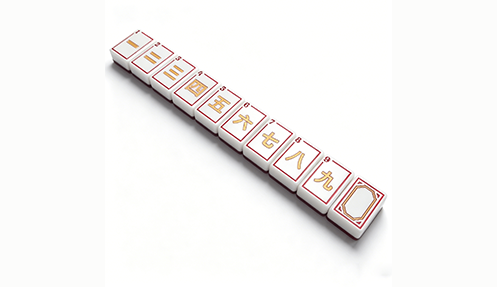
| Characters or Craks | Chinese numbers and 萬 | Numbered suit |
| Winds | 東, 南, 西 and 北 | Honor tiles representing four directions |
| Dragons | 中, 發 and a blank or framed symbol | Honor tiles used in scoring patterns |
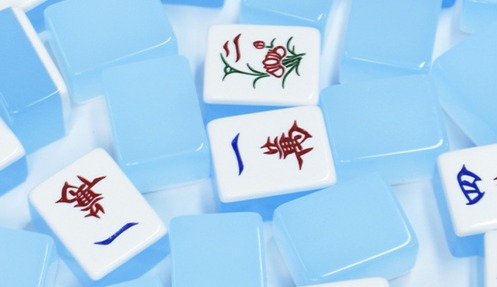
| Flowers and Seasons | Plants or seasonal images | Bonus tiles in selected variants |
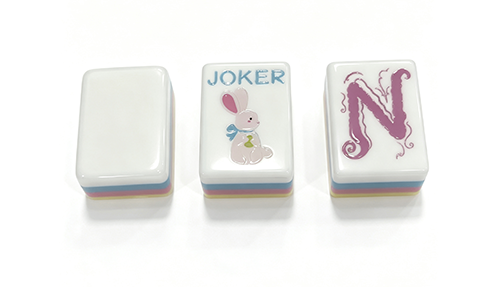
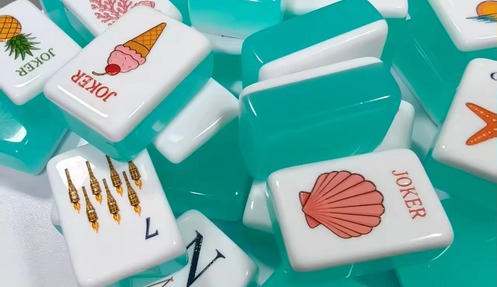
| Jokers | “Joker” text or distinctive artwork | Wild tiles used primarily in American Mahjong |
How to Recognize Symbols on Acrylic Mahjong Tiles
The simplest method is to recognize the group before reading the exact value. Circles belong to Dots. Repeated stalk-like marks belong to Bamboo. Chinese numerals paired with 萬 belong to Characters.
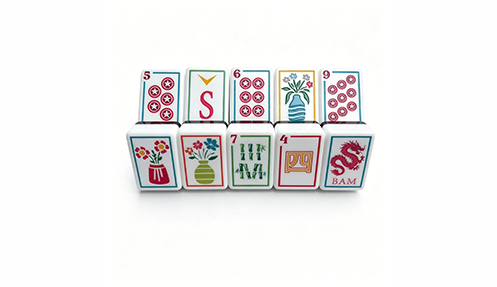
Winds and Dragons require more familiarity because they do not form a numerical sequence. New players often learn these seven honor tiles by shape and position. American mahjong tiles may add English letters or Arabic numbers in the corners, making the traditional symbols easier to recognize.
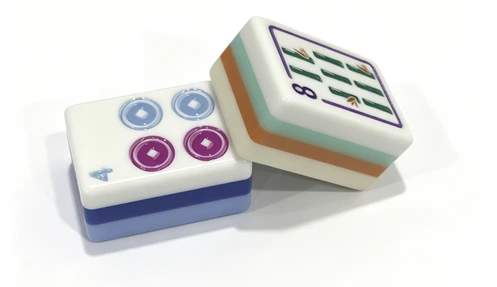
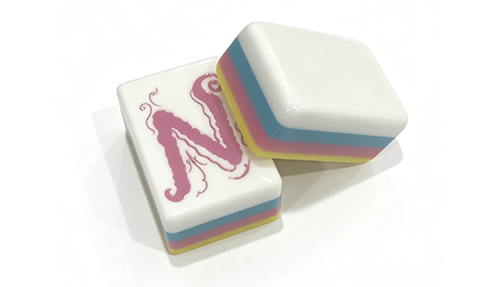
This process matters when a set uses decorative artwork. Unusual colors, transparent layers and themed illustrations can give custom acrylic mahjong tiles a strong identity, but the underlying value must remain clear at normal playing distance.
Color should support recognition rather than carry it alone. Players with color-vision differences may struggle when categories share similar shapes and differ only in red or green. Strong contrast, consistent placement and distinct outlines make a set more accessible.
The Three Numbered Suits in Chinese Mahjong Tiles
The numbered section contains Dots, Bamboo and Characters. Each suit runs from One to Nine, with four copies of each value. This produces 108 suited tiles altogether.
Dots or Circles
The Dot suit uses circular symbols arranged in recognizable patterns. The circles are historically associated with coins, reflecting Mahjong’s connection with earlier Chinese money-suited playing cards.
One Dot often contains a single large decorative circle. Higher values use repeated circles arranged so players can recognize them without slowly counting every mark. A custom version may change the internal illustration or palette, but the quantity and arrangement should remain visible.
Bamboo or Bams
The Bamboo suit uses repeated line forms associated with bamboo stalks or strings of coins. Tiles Two through Nine generally display the corresponding number of forms.
One Bamboo is the familiar exception. It frequently features a bird, which may resemble a sparrow, peacock or another species. This freedom makes One Bamboo a natural place for original artwork, provided it remains connected to the suit and cannot be mistaken for a Flower.
Characters or Craks
Character tiles display a Chinese number together with 萬, meaning “ten thousand.” American players often call the suit Craks, an abbreviation of Characters.
For players who do not read Chinese, a small Arabic number is useful. It preserves the traditional character while making the tile faster to identify. The index should support the main symbol rather than dominate the composition or disappear into a decorative background.
Winds and Dragons in an Acrylic Mahjong Set
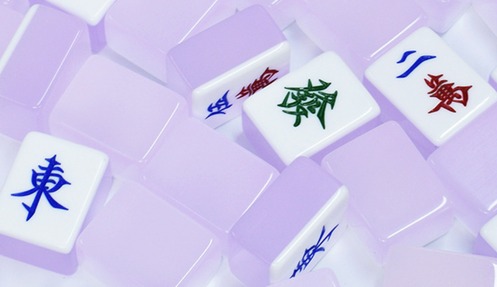
Winds and Dragons are collectively known as honor tiles. They have no numerical sequence but play important roles in hand formation and scoring under many rules.
The four Winds are East 東, South 南, West 西 and North 北. They may relate to a player’s seat, the current round or particular scoring combinations. Their exact use changes between Mahjong versions, so beginners should learn the symbols before attempting to memorize every scoring condition.
The Dragons are Red, Green and White. Red commonly displays 中, meaning “center” or “middle.” Green usually displays 發, a character associated with development or prosperity. White may be shown as an empty frame or a blank face.
That blank White Dragon is easily confused with a spare tile. Inspect the complete assortment: four matching blank tiles placed with the honor group are likely White Dragons, while replacements are usually separated or supplied in smaller quantities.
Reflective acrylic can make fine strokes harder to see under concentrated lighting. Honor tiles therefore benefit from bold lines, comfortable spacing and strong contrast.
Flowers, Seasons and American Mahjong Tiles
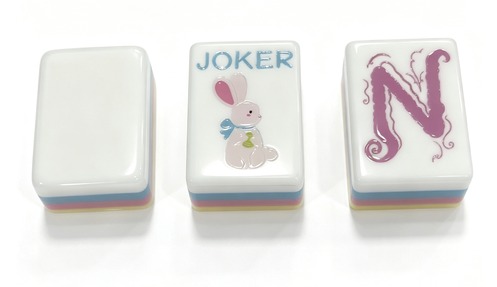
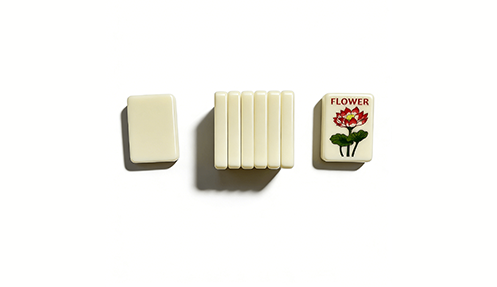
Flower and Season tiles allow greater artistic variation. A traditional group often contains Plum, Orchid, Chrysanthemum and Bamboo alongside Spring, Summer, Autumn and Winter.
The World Mahjong Organization’s competition rules describe a 144-tile set containing eight Flower tiles. Other Mahjong versions may exclude Flowers or treat them differently when drawn. Tile count alone therefore does not always reveal the intended style of play.
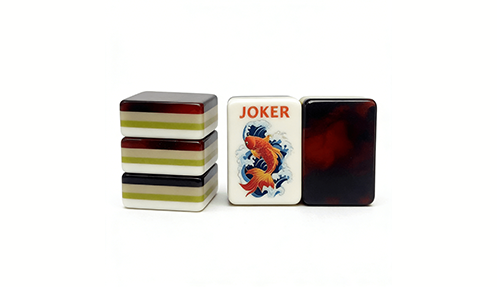
American mahjong tiles also use Flowers and normally include Jokers. A Joker may substitute within eligible groupings according to the applicable rules or card. This variation has a practical consequence for product development: the target market must be decided before artwork and set configuration are finalized.
Attractive Flower illustrations cannot compensate for the wrong quantity of Jokers, missing indices or unsuitable accessories. Play format is part of the product specification.
Designing Custom Mahjong Tiles Without Losing Meaning
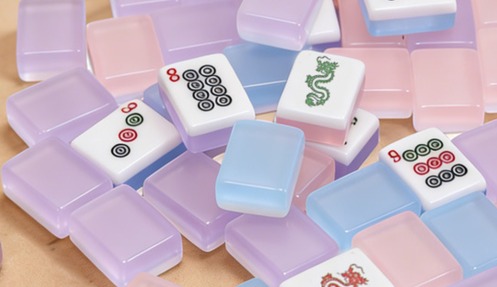
Successful custom mahjong tiles feel original without forcing players to relearn the visual system. Creativity works best when it rests on consistent rules.
Before illustrating individual faces, establish number placement, corner indices, line thickness, color contrast and repeated borders. Test artwork at the physical tile size. Details that look clean on a monitor may close up during engraving or disappear after reduction.
Transparent acrylic creates another challenge because the table, rack and surrounding colors remain visible through the tile. A backing layer, deeper engraving or carefully selected fill can preserve contrast.
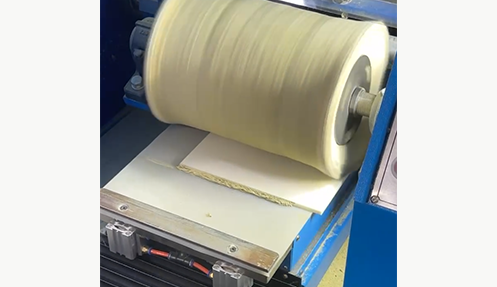
At Symphony Acrylic, engraving, printing, color filling, custom backs and multilayer construction for acrylic Mahjong tiles can be matched to the artwork rather than applied as a standard recipe. Bold symbols may suit engraving; detailed multicolor illustrations may require printing. Precision processing and controlled finishing then help the full set align, stack and read consistently.
The final review should take place at three distances: close enough to assess production, at normal hand distance and across the table. A tile design succeeds only when it works in all three contexts.
FAQ About Mahjong Tile Symbols
Are all blank Mahjong tiles White Dragons?
No. Blank-looking pieces may be White Dragons, replacements or optional house-rule tiles. Their quantity and position in the complete set usually reveal their purpose.
Why do symbols differ between sets?
Regional conventions, manufacturing methods and artistic preferences influence Birds, Flowers, Dragons and indices. Their gameplay categories can remain the same even when the illustrations change.
Can traditional symbols be replaced with branded artwork?
Yes, provided suit and value remain immediately recognizable. Logos, fonts and illustrations should also be original or properly licensed for commercial use.
Do American Mahjong tiles need English indices?
They are not what makes a physical tile playable, but they improve access for players who cannot read Chinese characters and are valuable for beginner or retail sets.
Can every tile carry a logo on its back?
Yes, if placement, color and finish remain consistent. No tile should contain a visible difference that identifies it while face down.
Authoritative References
- World Mahjong Organization — Mahjong Competition Rules
- The Unicode Standard — Mahjong Tiles
- Stanford University — How Mahjong Shaped Modern America
- University of Pennsylvania Museum — Historic Mahjong Tile Set
Develop a Recognizable Custom Acrylic Mahjong Set
Distinctive artwork should make a set more memorable, not more difficult to play. Share the intended market, tile configuration and visual concept with Symphony Acrylic through our contact page to develop symbols, material layers, production methods and packaging as one readable, repeatable collection.
Table of Contents
September 10, 2026
Pearl, Tortoise, Transparent or Solid: Which Acrylic Mahjong Finish Fits Your Collection?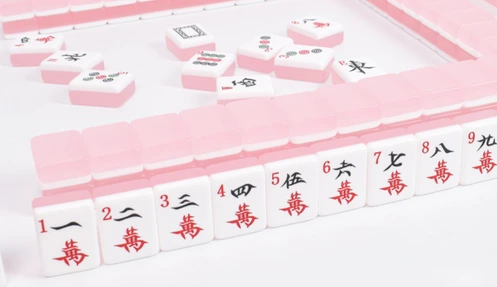 View
details
View
details
September 7, 2026
What Is the Prettiest Mahjong Set? Exploring Luxury Mahjong Set Designs View
details
View
details