Are Chinese and Japanese Mahjong Tiles the Same?
September 28, 2026
Read:1
Source: Dongguan XingfenglinAcrylic Products Co., Ltd
This guide compares the similarities and differences between Chinese and Japanese mahjong tiles, explains when the two can be used interchangeably, and looks at what players and buyers should consider when choosing between them.
Chinese vs Japanese Mahjong Tiles: Quick Comparison
At first glance, the two sets can look almost identical. They use the same three numbered suits and the same basic honor tiles. The differences become clearer when the complete set and intended playing format are compared.
| Feature | Chinese Mahjong Tiles | Japanese Mahjong Tiles |
|---|---|---|
| Core tile count | 136 | 136 |
| Common configuration | 136 or 144, depending on rules | 136 used in standard Riichi play |
| Characters | Yes | Yes |
| Bamboo | Yes | Yes |
| Dots | Yes | Yes |
| Winds | Yes | Yes |
| Dragons | Yes | Yes |
| Flowers / Seasons | Used in some formats | Normally not used in Riichi |
| Red fives | Not normally required | Common in modern Riichi sets |
| Tile dimensions | Vary by set and market | Often more compact |
| Scoring accessories | Depend on the format | Scoring sticks are commonly used |
The important point is that both systems start from the same 136-tile foundation. The differences are mainly in what is added to that foundation and how the physical set is designed for a particular style of mahjong.
What Tiles Do Chinese and Japanese Mahjong Have in Common?
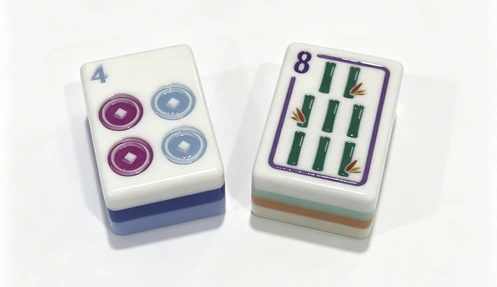
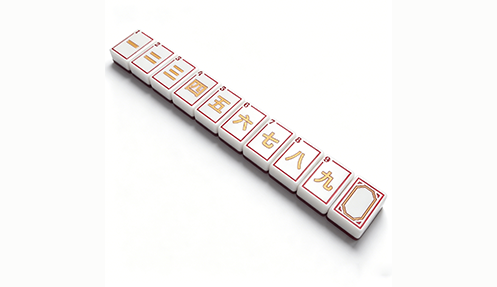
At the heart of both Chinese and Japanese mahjong is the same set of 136 core tiles. Players will find the familiar Characters, Bamboo and Dots suits in both versions, numbered from 1 to 9 with four of each tile. These three suits make up most of the set, with 108 tiles altogether.
The rest are the honor tiles: East, South, West and North Winds, along with the Red, Green and White Dragons. These are also repeated four times, bringing the core set to 136 tiles.
So the basic tile system is not what separates Chinese mahjong from Japanese Riichi. The differences become clearer once you look beyond these shared tiles, particularly at the extra or specially configured tiles used for each style of play.
How Many Tiles Are in Chinese and Japanese Mahjong?
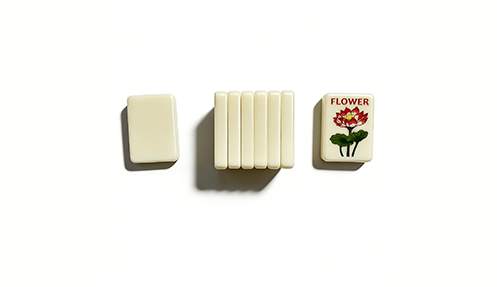
Chinese mahjong sets commonly contain 136 or 144 tiles, depending on the rules they are made for. The 136-tile version covers the standard suits and honor tiles, while a 144-tile set adds eight Flower and Season tiles. Because Chinese mahjong has several regional variations, these additional tiles are used in some games but not others. As a result, both 136- and 144-tile configurations are normal, and the correct choice depends on the style of play rather than a single fixed standard.
Japanese Riichi Mahjong normally uses 136 tiles during play, without Flowers or Seasons. A retail set may still contain more pieces than this because manufacturers sometimes include red fives, replacement pieces or other extras alongside the playable set. This can make package counts slightly misleading when comparing products. Rather than judging a Chinese or Japanese set by the total number alone, it is more useful to check which tiles are included and whether that configuration matches the rules you intend to play.
What Are the Main Differences Between Chinese and Japanese Mahjong Tiles?
Sharing the same core tiles does not mean the two sets are identical. Once they are prepared for their respective styles of play, several differences become apparent, particularly in the special tiles, physical proportions and visual treatment.
Flower and Season Tiles
Flowers and Seasons are familiar features in many Chinese mahjong sets, but whether they are used depends on the regional rules. Unlike ordinary suited or honor tiles, they serve as bonus tiles rather than forming standard sequences and sets. Japanese Riichi normally plays without them, so a player moving between the two styles may find that these tiles are simply set aside. Their presence is therefore better understood as a reflection of the intended rules rather than a defining feature of every Chinese set.
Red Five Tiles
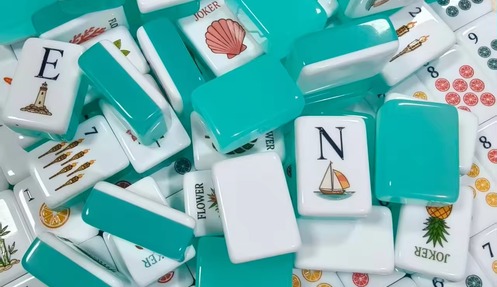
Red fives, or aka-dora, are strongly associated with modern Japanese Riichi Mahjong. They retain the same numerical value as an ordinary five and can be used in the same combinations, but under Riichi rules they may add scoring value as dora. This makes them different from Jokers: a red five cannot stand in for another number or suit. They are uncommon in traditional Chinese configurations, so their presence is often one of the easiest ways to recognize a set prepared specifically for Riichi.
Tile Size and Proportions
The physical difference is less clear-cut. Japanese Riichi tiles tend to be compact with relatively substantial thickness, while Chinese tiles can be found in a broader range of sizes. Neither style, however, is defined by one mandatory dimension. Manufacturers, markets and individual collections can all use different proportions.
For that reason, size matters more as a product specification than as a way to identify where a set comes from. When developing a custom collection, specifying the exact length, width and thickness avoids the ambiguity of terms such as Chinese size or Japanese size and also gives a reliable basis for trays, cases and other packaging.
Face Design and Overall Appearance
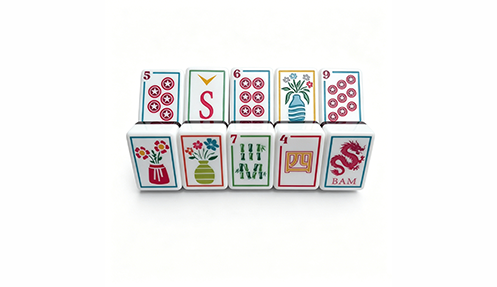
The same Characters, Bamboo, Dots and honor tiles can look quite different from one set to another. Fonts, symbol proportions, colors and details such as the One Bamboo illustration often vary, while engraving and printing create different finishes on the tile face. These visual choices do not change how the tiles are played, but they can make Chinese and Japanese sets easy to distinguish even when much of the underlying tile structure is shared.
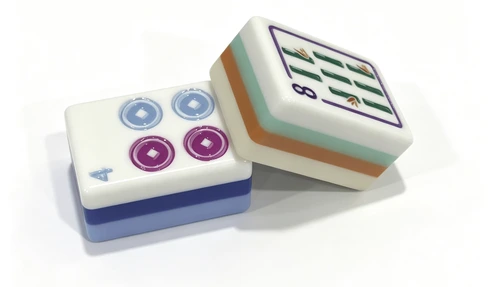
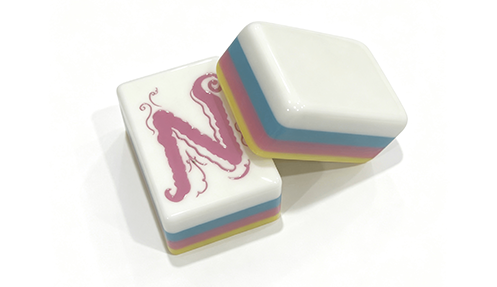
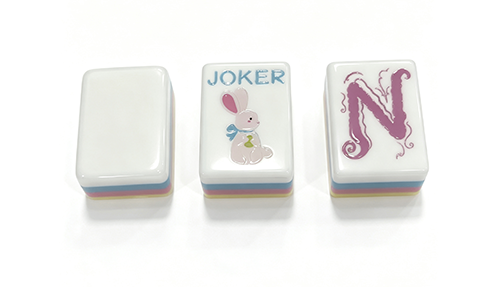
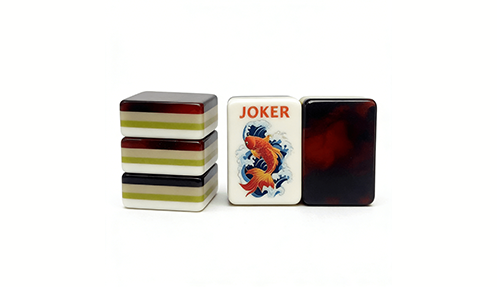
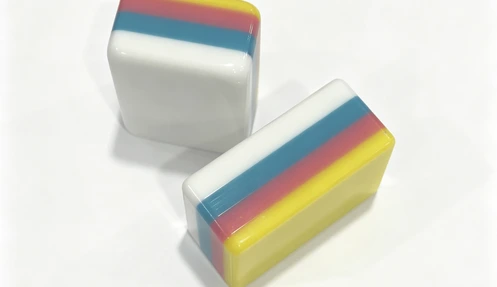
The difference becomes even more noticeable in modern acrylic sets, where the tile body itself can be part of the design. Solid colors, transparent elements, contrasting backs and layered acrylic can all be combined with traditional Mahjong symbols. This is also how we approach Chinese Mahjong tiles at Symphony Acrylic: the required playing configuration remains the starting point, while the supplied artwork can be adapted through different colors, dimensions, engraving or printing, and layered PMMA construction. The result can look very different from a conventional set without changing the familiar tile system behind it.
Can Chinese Mahjong Tiles Be Used for Japanese Riichi?
In many cases, yes. Since both styles share the same 136 core tiles, a Chinese mahjong set can often be used for Japanese Riichi as long as all three numbered suits, Winds and Dragons are present. If the Chinese set includes Flowers and Seasons, those tiles can simply be left out for Riichi play.
The main point to check is whether the Riichi rules being used call for red fives. A standard Chinese set may not include them, so players who want to use aka-dora will need the appropriate red five tiles. Riichi sets may also come with scoring sticks and other accessories that are not normally part of a Chinese set, although these do not change the compatibility of the tiles themselves.
The same principle works in the other direction. Japanese Riichi tiles can be used for Chinese variations that rely only on the shared core set, but they may not cover rules that call for Flowers, Seasons or other additional tiles. In practice, the name on the box matters less than the actual configuration: if the set contains every tile required by the rules you are playing, the core tiles themselves can usually cross between the two styles.
What Should You Consider When Choosing Chinese or Japanese Mahjong Tiles?
Once the differences between the two formats are clear, choosing a set becomes less about comparing individual features and more about matching the product to its intended audience. For personal use, that may simply mean following familiar playing conventions. For retail or custom production, the decision also affects how the product is specified and presented.
1. Start With the Players, Not the Product Label
A Chinese or Japanese label does not tell you everything about how a set will be used. Chinese mahjong covers several regional variations, while Riichi has its own established conventions. Before choosing a set, identify who will play with it and which version they already know. This provides a much clearer basis for deciding what belongs in the final product.
2. Balance Familiarity With Product Design
A distinctive design can make a mahjong collection stand out, but usability still comes first. Players need to recognize tiles quickly, handle them comfortably and arrange them naturally during a game. Changes to artwork, proportions or construction should therefore be considered in terms of how they affect the playing experience, not only how they look in product photos.
This becomes especially important with custom acrylic sets, where there is considerable freedom to experiment with color, transparency and layered construction. At Symphony Acrylic, supplied artwork can be adapted to different PMMA structures and finishes while keeping the essential playing information clear. The goal is not simply to make the tiles different, but to give the collection its own visual identity without losing the familiarity players rely on.
3. Think About the Complete Product, Not Just the Tiles
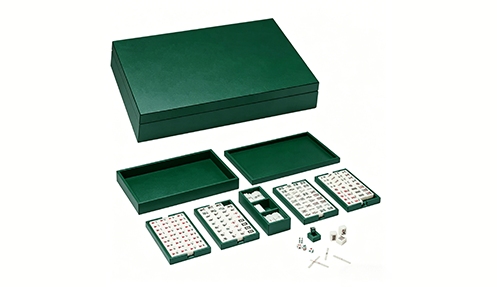
For a retail collection, the tiles are only one part of what the customer receives. Their dimensions and quantity influence the internal tray, storage space, box construction, shipping weight and the way the set is presented when opened. These elements work better when they are planned around the finished tiles rather than selected independently at the end of production.
A traditional home set, a compact travel version and a premium gift set may follow the same underlying game but require very different packaging and presentation. Defining the intended product position early makes those decisions more consistent and reduces the need to compromise later in development.
FAQs About Chinese and Japanese Mahjong Tiles
1. Do Chinese and Japanese mahjong tiles use the same symbols?
Most of the core symbols are shared. Both use Characters, Bamboo, Dots, four Winds and three Dragons. The artwork itself can vary, however, so fonts, colors and illustrations may look different even when the tiles represent the same value.
2. Does Japanese Mahjong use Chinese characters?
Yes. Japanese Riichi Mahjong retains Chinese characters on several tiles, particularly the Character suit, Winds and some Dragons. Japanese terminology for the tiles may differ, but the written symbols come from the same broader Mahjong tradition.
3. Are red fives required in every Japanese Mahjong set?
Not necessarily. Red fives are widely associated with modern Riichi Mahjong, but their use depends on the rules being followed. A set intended for a particular tournament, club or market should therefore be checked against that format rather than assuming every Riichi set needs exactly the same red-five configuration.
4. Do Chinese and Japanese mahjong tiles use the same materials?
There is no material that is exclusive to either format. Modern sets can be made from different plastics and acrylic materials, while the choice of material is largely a product-design decision rather than a rule requirement. What makes a set Chinese or Japanese is primarily its playing configuration, not the material used to manufacture it.
5. Can the same Mahjong artwork be adapted for Chinese and Japanese sets?
Yes, provided the artwork is adjusted to the required tile configuration. The shared core symbols make it possible to carry a consistent visual style across both collections, while format-specific pieces can be developed separately. This can be useful for brands building related products for different Mahjong audiences.
6. What information should I provide when ordering custom Chinese or Japanese mahjong tiles?
Start with the intended Mahjong format and complete tile list, followed by the required dimensions and artwork. For a custom acrylic project, it is also useful to specify colors, tile construction, engraving or printing requirements, packaging and expected quantity. A clear specification makes it easier to evaluate the design before sampling begins.
Conclusion
Chinese and Japanese mahjong share the same foundation, but differences in playing conventions and set configuration make them distinct products. The best choice ultimately depends on the rules being played and the expectations of the people who will use the set. To see material and finish options side by side, explore our acrylic mahjong tiles.
For brands and retailers developing their own collection, Symphony Acrylic supports custom Chinese Mahjong tiles with different configurations, artwork, dimensions, PMMA colors, layered structures and packaging. Contact us with your tile design and project requirements to discuss a custom Mahjong set before sampling.
Table of Contents
September 10, 2026
Pearl, Tortoise, Transparent or Solid: Which Acrylic Mahjong Finish Fits Your Collection? View
details
September 7, 2026
What Is the Prettiest Mahjong Set? Exploring Luxury Mahjong Set Designs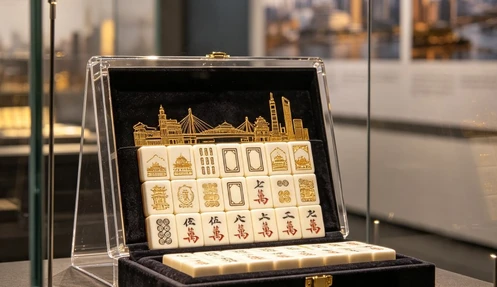 View
details