Is Chinese Mahjong Different Than Hong Kong Mahjong?
September 29, 2026
Read:1
Source: Dongguan XingfenglinAcrylic Products Co., Ltd
Yes, but the difference is not as simple as comparing two completely separate games. Hong Kong Mahjong is a regional form of Chinese Mahjong, while Chinese Mahjong is a broader term that can refer to several rule systems played across different regions and communities.
So where do the differences actually appear—in the rules, the tiles, or both? This guide explains the relationship between them, how their tile sets compare, and whether the same Mahjong set can be used for both.
What Does Chinese Mahjong Actually Mean?
Chinese Mahjong is best understood as a broad category rather than a single version of the game. It covers several Mahjong traditions that share the same historical roots but developed differently across regions and playing communities. Hong Kong Mahjong therefore sits within the wider Chinese Mahjong tradition rather than being a completely separate category.
1. Chinese Mahjong Is a Family of Regional Games
Chinese Mahjong includes a number of regional and standardized variations, such as Hong Kong Mahjong, Sichuan Mahjong, Taiwanese Mahjong and Mahjong Competition Rules. Each developed in a different playing environment and has its own conventions, which is why saying someone plays Chinese Mahjong does not fully identify how they play. A more precise description usually requires the specific variation, such as Hong Kong Mahjong, rather than the broader Chinese Mahjong label.
2. Why Chinese Mahjong Does Not Have One Universal Rule Set
Mahjong spread through regional communities long before a single governing rulebook could define how everyone should play, so local traditions developed independently and were passed down through families, clubs and communities. Standardized systems were introduced later for organized and competitive play, but they did not replace these established regional traditions. As a result, there is no single rule set that represents all Chinese Mahjong; the rules depend on the particular variation being played.
What Is Hong Kong Mahjong?
Hong Kong Mahjong is a regional form of Chinese Mahjong shaped by the playing traditions of Hong Kong and Cantonese-speaking communities. It is also commonly described as Hong Kong Old Style Mahjong, especially when it needs to be distinguished from other regional or standardized Chinese variants.
Its identity comes from the way established local conventions developed into a recognizable style of play. Rather than representing a different branch of Mahjong with an unrelated structure, it preserves the traditional foundation of the game while following conventions associated specifically with Hong Kong play. The use of faan is one of its defining features, giving players a structured way to determine the value of completed hands.
The term Hong Kong Mahjong therefore provides considerably more information than the broader label Chinese Mahjong. It identifies a particular regional tradition with recognizable conventions, while still allowing some variation in how individual groups play. Understanding that relationship is the key starting point before looking at the specific rule and tile differences between the two terms.
Chinese Mahjong vs Hong Kong Mahjong: What Are the Main Differences?
The main difference is not the basic identity of the game, but how the rules are defined. Chinese Mahjong covers multiple regional and standardized variations, so there is no single scoring or winning system that applies to every game. Hong Kong Mahjong narrows this down to a particular regional tradition with more recognizable conventions.
| Feature | Chinese Mahjong | Hong Kong Mahjong |
|---|---|---|
| Scope | Broad term covering multiple Chinese Mahjong variations | A specific regional variation within Chinese Mahjong |
| Rules | Depend on the regional or standardized version being played | Follow conventions associated with Hong Kong-style play |
| Scoring | Can vary substantially between different rulesets | Commonly uses a faan-based scoring system |
| Winning Requirements | Depend on the particular variation | Often determined partly by the required faan value |
| Special Hands | Recognition and value vary by ruleset | Follows patterns recognized within the Hong Kong scoring tradition |
| Table Variations | Regional and local differences are common | Some scoring details can still vary between playing groups |
In practice, this means that moving from one Chinese Mahjong variation to Hong Kong Mahjong may require learning a different approach to scoring and determining which completed hands qualify. It does not necessarily mean learning an entirely new game.
The physical tiles are another question. Many of the tiles used in Hong Kong Mahjong are the same ones found in other Chinese Mahjong sets, but the exact configuration can depend on whether bonus tiles are included.
Do You Need Different Tiles for Chinese and Hong Kong Mahjong?
Usually, no. Hong Kong Mahjong uses the same familiar suits and honor tiles found in standard Chinese sets, so the physical difference between the two is much smaller than the difference in how they may be played.
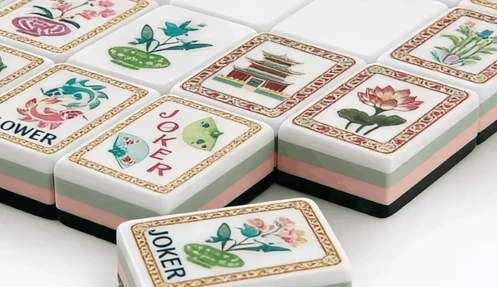
A standard 136-tile base is made up of:
| Tile Group | Tiles | Quantity |
|---|---|---|
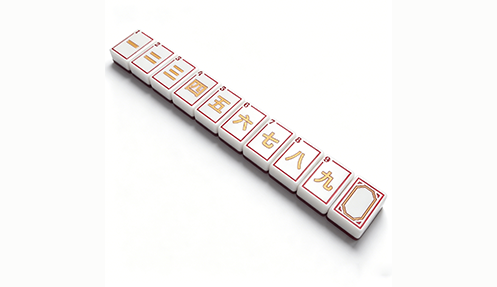
| Characters | 1–9, four of each | 36 |
| Bamboo | 1–9, four of each | 36 |
| Dots | 1–9, four of each | 36 |
| Winds | East, South, West, North | 16 |
| Dragons | Red, Green, White | 12 |
| Total | 136 |
This common base is why an existing Chinese Mahjong set can often be used for Hong Kong Mahjong without replacing the main playing tiles.
1. Where Flowers and Seasons Come In
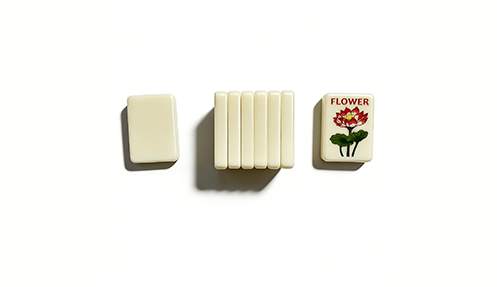
The main variation beyond the 136 core tiles is the addition of Flowers and Seasons. Four Flower tiles and four Season tiles create the familiar 144-tile configuration. Unlike suited and honor tiles, these are bonus tiles: they are revealed and replaced rather than used to form the standard combinations in a hand.
Their role depends on the rules in use. Some Hong Kong Mahjong games include all eight bonus tiles, while other forms of Chinese Mahjong may use them differently or omit them altogether. The move from 136 to 144 tiles therefore reflects a variation in play rather than a completely different Mahjong set.
2. Can the Same Set Work for Both?
In many cases, yes. The Characters, Bamboo, Dots, Winds and Dragons used for Hong Kong Mahjong are already present in a standard Chinese set. A player moving between the two does not normally need another version of these core tiles.
The only adjustment may be which additional tiles are brought into play. If Flowers and Seasons are required, they can be added to the core set; if they are not part of the rules, they remain outside the game.
This shared structure is what makes one Mahjong set usable across multiple Chinese variations. The rules may change from one table to another, while most of the physical tiles remain the same.
Does the Tile Design Change Between Chinese and Hong Kong Mahjong?
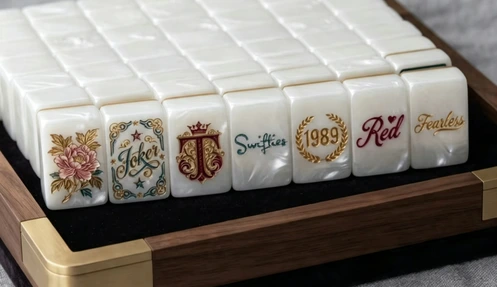
There is no required visual style that makes a Mahjong set specifically Hong Kong rather than Chinese. Traditional sets often look very similar, using familiar characters and symbols for the suits, Winds and Dragons. Differences are more likely to come from who the set is designed for and how the manufacturer chooses to present those symbols.
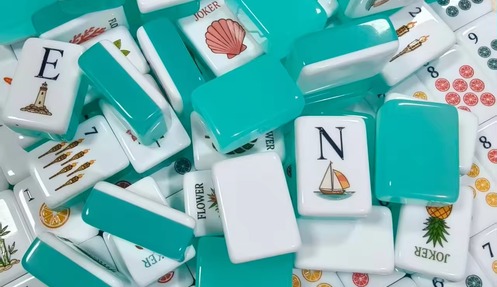
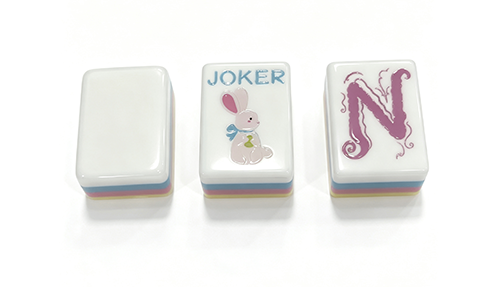
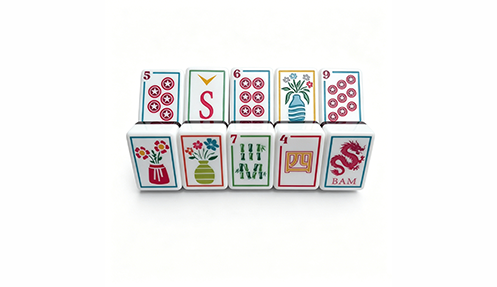
For example, some tiles display only traditional Chinese markings, while others add Arabic numerals or letters to help international players identify Characters, Winds and other tiles more quickly. These indexes are optional rather than part of the Hong Kong rules. A set intended for experienced local players may leave them out entirely, while one made for a broader market may include them for readability.
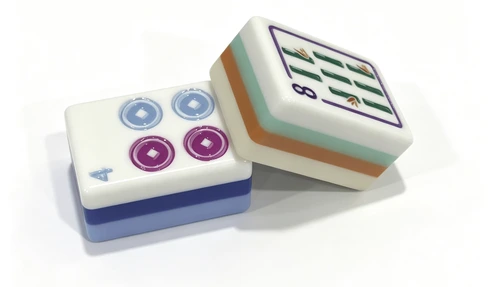
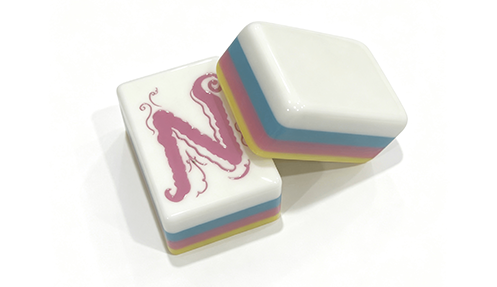
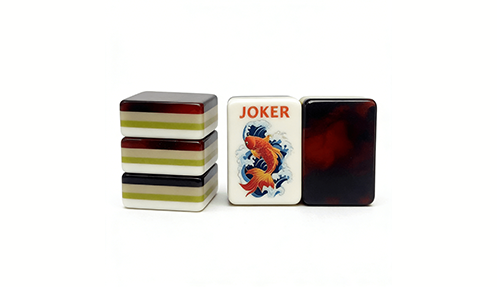
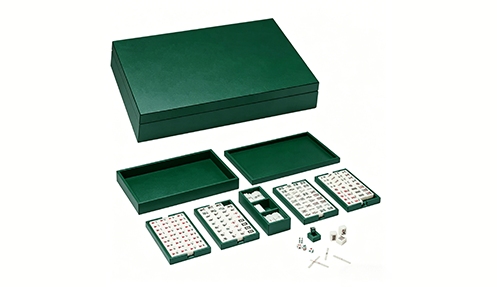
There is also considerable freedom in the physical design. Tile dimensions, thickness, weight, engraving, surface finish and backing can all vary, as can the material itself. At Symphony Acrylic, for example, the same recognizable Mahjong structure can be developed in clear or colored acrylic, pearl effects, tortoiseshell patterns and other finishes, with artwork adapted to the intended collection. Traditional symbols can be retained closely or given a more contemporary treatment without losing their function at the table.
What matters most is recognition. Players should be able to distinguish every suit and honor tile without ambiguity. Beyond that practical requirement, a Hong Kong Mahjong set can be traditional, minimalist, colorful or highly customized; its appearance does not have to follow a separate Hong Kong-specific design standard.
Frequently Asked Questions About Chinese and Hong Kong Mahjong
1. Is Hong Kong Mahjong the same as Chinese Mahjong?
Hong Kong Mahjong is a form of Chinese Mahjong, but the terms are not interchangeable. Chinese Mahjong is a broader category that includes several regional and standardized variations. Hong Kong Mahjong refers specifically to the tradition associated with Hong Kong play and its established scoring conventions.
2. Is Hong Kong Mahjong the same as Cantonese Mahjong?
The terms are often used closely because Hong Kong Mahjong developed within Cantonese-speaking communities and shares many of the same traditions. However, individual groups may still follow different scoring details or house rules, so the names do not guarantee that every table plays in exactly the same way.
3. Can I use Chinese Mahjong tiles to play Hong Kong Mahjong?
In many cases, yes. The core Characters, Bamboo, Dots, Winds and Dragons are shared, so a standard Chinese set already contains the main playing tiles. The additional point to check is whether the Hong Kong rules used by your group include Flowers and Seasons.
4. Is Hong Kong Mahjong played with 136 or 144 tiles?
Both configurations may be encountered. The 136-tile configuration contains the three numbered suits, Winds and Dragons. Adding four Flowers and four Seasons produces a 144-tile set. Which bonus tiles enter the game depends on the rules followed by the players.
5. Do Hong Kong Mahjong tiles need Arabic numbers?
No. Arabic numerals and letters are optional reading aids rather than a requirement of Hong Kong Mahjong. Traditional tiles can use Chinese characters and symbols alone, while sets intended for international players may add indexes to make individual tiles easier to identify.
6. Are Hong Kong Mahjong tiles a different size from Chinese Mahjong tiles?
There is no single required Hong Kong Mahjong tile size. Dimensions vary between manufacturers and collections according to handling preferences, visual style and intended use. Tile size therefore does not determine whether a set is suitable for Hong Kong Mahjong.
Conclusion
Hong Kong Mahjong belongs to the wider Chinese Mahjong tradition, so the difference between them is mainly about the specific rules being followed rather than an entirely different set of tiles. Their shared tile structure also means one well-configured set can often support both. To compare material and finish options for your collection, explore our acrylic mahjong tiles.
For brands developing their own Mahjong collection, Symphony Acrylic can customize tile artwork, size, acrylic finishes, configuration and packaging around supplied designs and project requirements. Contact us to discuss your custom Mahjong tile project.
Table of Contents
September 10, 2026
Pearl, Tortoise, Transparent or Solid: Which Acrylic Mahjong Finish Fits Your Collection? View
details
September 7, 2026
What Is the Prettiest Mahjong Set? Exploring Luxury Mahjong Set Designs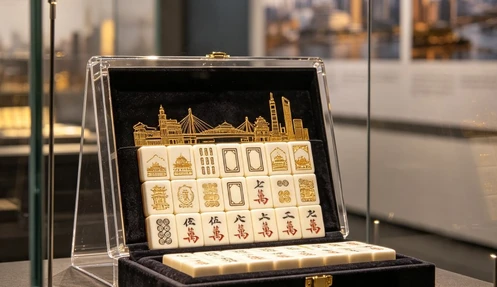 View
details