How Custom Acrylic Mahjong Sets Are Manufactured
July 27, 2026
Read:198
Source: Dongguan XingfenglinAcrylic Products Co., Ltd
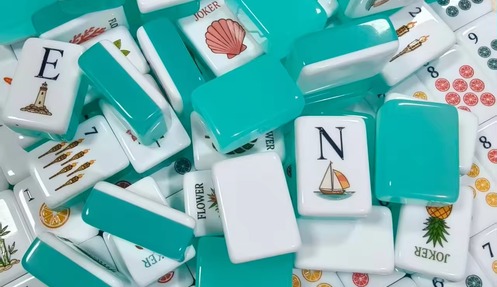
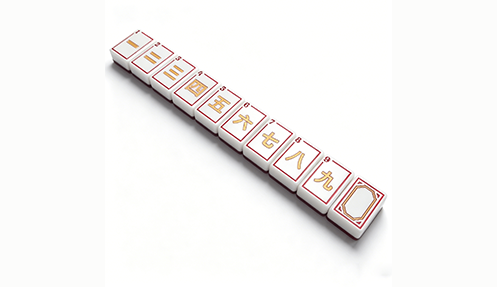
A finished acrylic mahjong set may look simple, but its clarity, edge shape and handling depend on several connected manufacturing steps. The process usually includes design confirmation, acrylic cutting, pattern production, flat polishing, tumbling polishing, cleaning, assembly and packaging.
Confirming the Custom Acrylic Mahjong Design
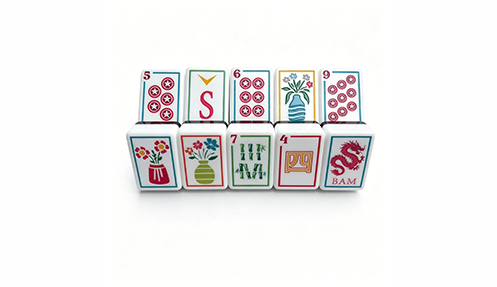
Production begins by confirming the tile size, acrylic color, layer structure, face patterns, back design and set configuration. Choosing the right size for acrylic mahjong tiles at this stage helps the finished set match its intended players and playing style. The artwork is reviewed to determine whether engraving, printing, laser marking or color filling will produce the clearest result.
Small text, narrow lines and detailed symbols need particular attention because they may lose clarity during engraving or filling. A sample can be made before bulk production to confirm the actual color, pattern position, surface effect and tile feel.
Cutting and Decorating Acrylic Mahjong Tiles
The selected acrylic sheets are cut into individual tile shapes according to the approved dimensions. Accurate cutting helps the tiles stack neatly and maintain a consistent feel across the complete set.
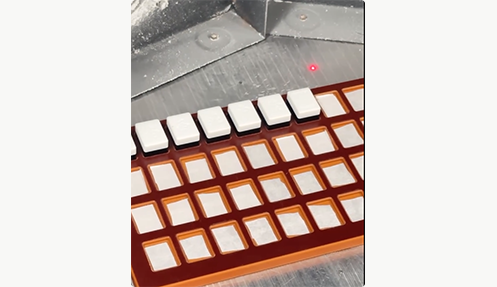
The tile faces are then engraved, printed or filled with color. Pattern alignment is especially important because even a small difference becomes easy to notice when similar tiles are placed together. Engraving depth and color coverage also need to remain consistent so that every symbol is clear and easy to read.
Flat Polishing Custom Acrylic Mahjong Tiles
Flat polishing is mainly used on the front and back surfaces of the tiles. At Symphony Acrylic, this process removes fine machining marks and gives the acrylic a smoother, clearer and more even finish.
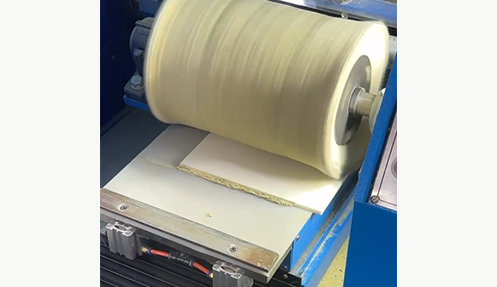
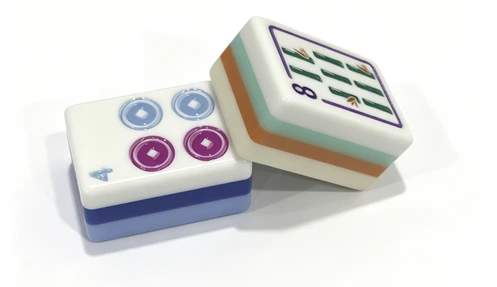
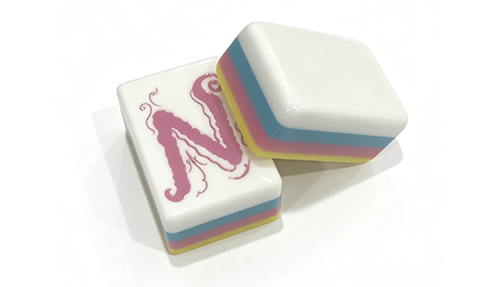
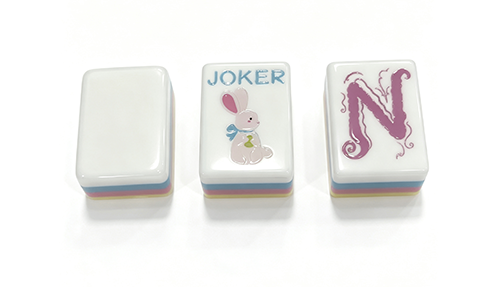
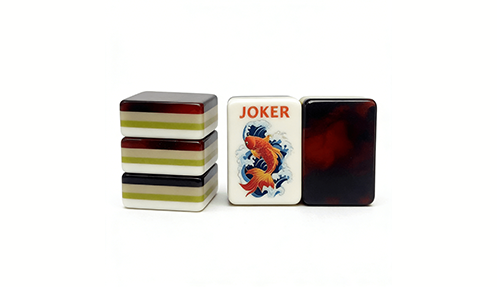
It is particularly important for transparent, translucent and layered acrylic mahjong tiles. Proper flat polishing improves the visibility of the colors and patterns while giving the surfaces a cleaner gloss.
The process must be adjusted carefully. Insufficient polishing may leave fine scratches or dull areas, while excessive pressure, heat or processing time may create surface waves or slightly change the tile thickness. Symphony Acrylic therefore focuses on achieving an even surface rather than simply making the tiles as glossy as possible.
Tumbling Polishing Acrylic Mahjong Tile Edges
Tumbling polishing is used to soften the edges and corners after cutting. The tiles move together with suitable polishing media, which gradually removes small burrs and reduces the sharp feel of unfinished acrylic edges.
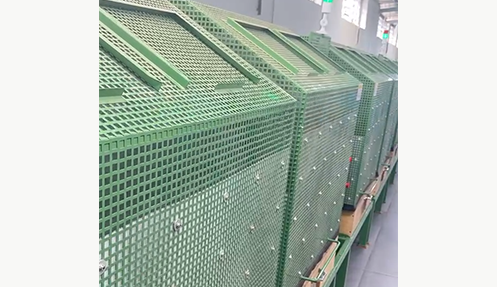
Symphony Acrylic adjusts the tumbling time and intensity according to the tile size and required corner shape. The aim is to create smooth, comfortable edges without making the corners excessively round.
If the tumbling process is too short, some edges may remain rough. If it continues for too long, the tile dimensions may decrease or the corners may lose their intended shape. The finished tiles are therefore reviewed for edge smoothness, corner consistency and overall dimensions after tumbling.
Flat Polishing vs. Tumbling Polishing
Flat polishing and tumbling polishing improve different parts of an acrylic mahjong tile. Flat polishing focuses on visual clarity, while tumbling polishing improves the areas most frequently touched during play.
| Comparison Point | Flat Polishing | Tumbling Polishing |
|---|---|---|
| Processing Area | Front and back surfaces | Edges and corners |
| Main Purpose | Improve flatness, clarity and gloss | Remove burrs and soften sharp edges |
| Finished Effect | Cleaner and brighter tile faces | Smoother corners and better handling |
| Main Process Factors | Pressure, heat and polishing time | Tumbling time, media and batch load |
| Insufficient Processing | Fine scratches or uneven gloss | Rough or sharp edges |
| Excessive Processing | Surface waves or dimensional changes | Over-rounded corners or impact marks |
| Inspection Focus | Clarity, flatness and surface consistency | Edge smoothness, corner shape and dimensions |
Both processes are necessary for a balanced finish. Flat polishing improves how the tiles look, while tumbling polishing improves how they feel when picked up, shuffled and arranged.
Cleaning and Inspecting Acrylic Mahjong Tiles
After polishing, the tiles are cleaned to remove dust, polishing residue and fingerprints. They are then reviewed together to identify visible differences in size, color, gloss or edge shape.
The patterns are also sorted and counted before assembly. This helps prevent missing, repeated or incorrect tile faces from entering the finished set. For layered acrylic tiles, the alignment and bonding areas are checked to make sure the sides appear clean and even.
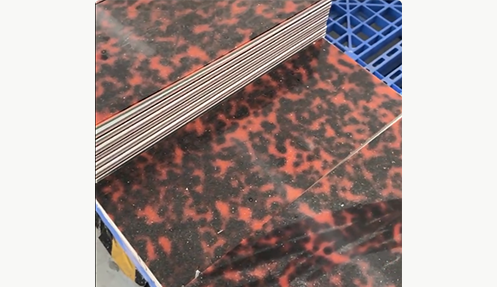
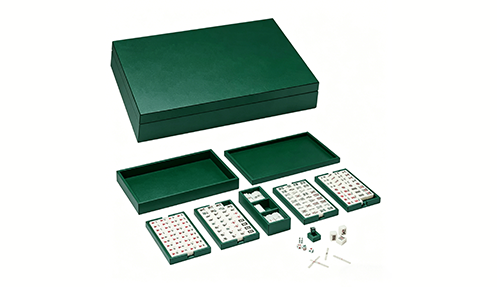
Once the tiles have passed inspection, they are arranged into complete sets. Racks, pushers, dice, mats and instruction cards can also be included when required.
The packaging needs to protect the polished surfaces as well as present the set neatly. Inserts should hold the tiles securely and reduce movement during transportation. For sets intended for retail or gifting, these mahjong set gift packaging ideas show how thoughtful presentation can make a set more memorable. Symphony Acrylic can coordinate the tiles, accessories, internal inserts and outer packaging so that the complete set is ready for retail, gifting or wholesale distribution.
Before shipment, the tile quantity, accessories and packaging details are checked against the confirmed specifications.
Conclusion
The finished quality of custom acrylic mahjong sets depends heavily on the polishing process. Flat polishing creates clear, smooth and glossy tile faces, while tumbling polishing removes rough edges and produces more comfortable corners.
By combining accurate cutting, clear pattern processing and carefully adjusted polishing, Symphony Acrylic produces custom acrylic mahjong sets with consistent dimensions, refined surfaces and a comfortable feel. Buyers comparing suppliers can also review how to choose a reliable American mahjong manufacturer before placing a bulk order.
Share your tile design, size, quantity and packaging requirements with Symphony Acrylic to receive a custom production quotation.
Frequently Asked Questions
1. What is the difference between flat polishing and tumbling polishing?
Flat polishing improves the flatness, clarity and gloss of the front and back surfaces, while tumbling polishing smooths the edges and corners. Symphony Acrylic uses both processes to give acrylic mahjong tiles a refined appearance and a comfortable feel.
2. Why do acrylic mahjong tiles need both polishing processes?
Acrylic mahjong tiles need both processes because they improve different parts of the tile. Flat polishing creates clearer and smoother tile faces, while tumbling polishing removes burrs and softens the edges for easier handling.
3. Can every mahjong tile have a custom design?
Yes. Symphony Acrylic can customize individual tile faces with characters, symbols, illustrations, patterns or brand logos. Depending on the artwork, the design may be produced through engraving, printing, laser marking or color filling.
4. Can I approve a sample before mass production?
Yes. Symphony Acrylic can provide a pre-production sample for confirmation before bulk manufacturing. The sample allows buyers to review the acrylic color, tile size, pattern position, engraving, polishing effect and packaging details.
5. How long does it take to manufacture custom acrylic mahjong sets?
Custom acrylic mahjong production typically takes 7-20 days after the design and sample details are confirmed. The exact lead time depends on the order quantity, tile structure, artwork complexity and packaging requirements.
6. What is the MOQ for custom acrylic mahjong sets?
Symphony Acrylics MOQ starts from 50 sets for single-layer acrylic mahjong tiles and 100 sets for two-layer, three-layer or four-layer designs. Packaging, accessories and special production requirements may affect the final order quantity.
Table of Contents
September 10, 2026
Pearl, Tortoise, Transparent or Solid: Which Acrylic Mahjong Finish Fits Your Collection? View
details
View
details
September 7, 2026
What Is the Prettiest Mahjong Set? Exploring Luxury Mahjong Set Designs View
details
View
details