How to Prepare Your Artwork for Custom Mahjong Tiles
October 30, 2026
Read:1
Source: Dongguan XingfenglinAcrylic Products Co., Ltd
Creating your own mahjong collection involves more than designing attractive illustrations. Each image needs to fit the intended tile, and every design must have a clear place in the finished set. For brands and designers developing custom mahjong tiles, the challenge is often turning individual artwork files into a collection that a manufacturer can understand and produce.
Quick Answer
To prepare artwork for custom mahjong tiles, identify the designs and quantities needed for your set, review how the illustrations will appear at actual tile size, and organize the files by tile category. Include your preferred dimensions, colors, backing design, and final artwork version so the manufacturer can evaluate your requirements.
What Designs Do You Need for a Complete Mahjong Set?
The artwork you need depends on the type of mahjong set you are developing. American and Chinese Mahjong use different tile configurations, so establishing the intended game format is the starting point for deciding which designs to include.
1. Know Which Tiles Need Their Own Designs
Not every physical tile requires a separate illustration. Numbered suits such as Bamboo (Bams), Characters (Craks), and Dots contain repeated tiles, meaning one design can be used for several identical pieces.
Special tiles may allow greater variation. For example, a botanical-themed collection might feature different illustrations on its Flower tiles while using a shared design for all Jokers. The number of unique artwork files therefore depends on how much of the collection you plan to customize, not simply the total number of tiles.
2. Make Sure No Tile Designs Are Missing
A full-set overview is useful for checking whether all required designs are present. Arrange the numbered suits, Winds, Dragons, Flowers, and Jokers by category, where applicable, and identify how many copies of each design are needed.
For an American Mahjong collection, a 152-tile configuration contains many repeated designs. The number of illustrations will be considerably smaller than the number of physical tiles unless you deliberately introduce additional variations. Spare or replacement tiles, if included, should be listed separately to avoid confusion.
3. Decide Whether the Tile Backs Will Share One Design
The back of each tile can feature a solid color, decorative pattern, or brand artwork. Within a playable set, a consistent backing is generally preferable because players should not be able to identify individual tiles while they are face down.
Different product editions can still have their own backing styles. A retailer might offer identical tile-face artwork with pink acrylic backs in one collection and green backs in another. Showing the front and back together makes these variations easier to understand.
Will Your Artwork Look the Same on Real Mahjong Tiles?
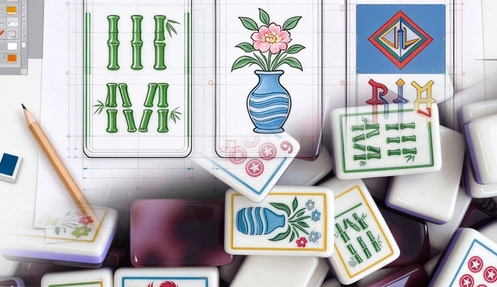
A detailed illustration may look balanced on a computer screen but feel crowded when reduced to the size of a mahjong tile. Previewing artwork at its intended physical dimensions helps reveal whether important details will remain visible. Adobe's Illustrator guidance describes how to examine artwork at its actual size, which is useful when checking designs intended for small products.
1. Will Small Details Still Be Easy to See?
A Joker illustration featuring a butterfly, for example, may contain fine lines that look clear when enlarged but blend together on a small tile. Decorative lettering and closely spaced patterns can present similar problems.
Review the artwork from a normal playing distance rather than relying on a magnified view. If the main symbol is difficult to recognize, adjusting the spacing or simplifying minor details may improve the design without changing its overall character.
2. Will the Artwork Fit the Tile Face?
An illustration created on a square canvas may not fit naturally onto a taller rectangular tile. Borders can appear crowded, while large decorative elements may leave too little space for numbers or identifying symbols.
Placing the artwork inside an outline matching your intended tile dimensions provides a more realistic preview. This is particularly helpful for designs with decorative frames or illustrations positioned near the edges.
3. Will the Colors Look Right on the Finished Tiles?
Digital colors do not always appear identical on physical products. Adobe's color-management guidance explains why colors may vary between screen displays and printed output. Although acrylic tile production involves different processes, the limitation of relying solely on screen previews remains relevant.
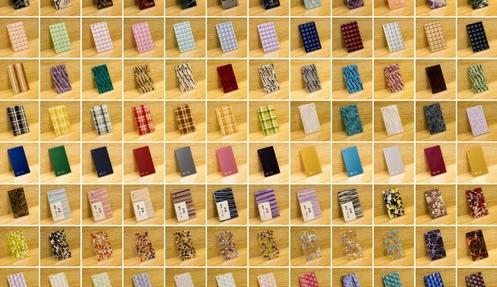
Consider the artwork together with the intended tile material and background color. Light illustrations may appear differently on white, colored, or translucent acrylic, so a physical sample is useful when specific color combinations are important to the collection.
How Should You Organize Your Custom Mahjong Tile Designs?
A folder containing dozens of unnamed images can be difficult to interpret, even when the artwork itself is complete. Grouping files by tile category and using descriptive names gives the manufacturer a clearer picture of the collection.
Names such as Bamboo-1, Red-Dragon, and Joker-Flower make individual designs easier to identify than generic labels like image01. A simple artwork list can also show how each illustration corresponds to the required number of tiles.
| Tile Design | Example File Name | Quantity per Set |
|---|---|---|
| One Bamboo | Bamboo-1 | 4 |
| Red Dragon | Red-Dragon | 4 |
| Custom Joker | Joker-Flower | 8, if all Jokers share one design |
| Custom Flower | Flower-1 | Depends on the set design |
| Tile Back | Tile-Back | One shared design |
Illustrative artwork list for an American-style collection, not a complete tile inventory.
If your collection includes multiple editions, separate their artwork or clearly identify which files are shared. Keep the original editable files where available, along with a visual overview showing the complete set. This gives the manufacturer both the individual designs and a reference for their intended arrangement.
When working with illustrations created by an external designer, confirm the commercial reproduction rights before ordering. The World Intellectual Property Organization explains that ownership of commissioned creative work can depend on local law and contractual terms, which is relevant to brands planning to sell illustrated mahjong collections.
What Should You Confirm Before Sending Your Artwork to a Manufacturer?
Once the designs are organized, the remaining information should describe the physical product. Specify the type of mahjong set, total tile quantity, preferred dimensions, colors, and backing style. If you have a reference product with the proportions you want, photographs and measurements can help communicate your preferences.
You should also identify the final approved artwork version and provide an estimated order quantity. If some choices remain open, such as selecting between two acrylic colors, indicate them clearly so they can be discussed during the manufacturing review.
| Information | What to Include |
|---|---|
| Artwork | Final designs and full-set overview |
| Set configuration | Mahjong type and tile quantities |
| Tile size | Preferred dimensions |
| Colors and backing | Intended material colors and backing design |
| Design version | Approved artwork files |
| Order volume | Estimated number of sets |
With this information, the manufacturer can review the project and identify whether additional details or adjustments are needed before moving forward.
FAQs About Custom Mahjong Tile Artwork
Can I use my own illustrations for custom mahjong tiles?
Yes. Original illustrations, lettering, patterns, and brand artwork can be used for custom tile designs, subject to manufacturing feasibility. The artwork should clearly identify which image belongs on each tile, and you should have the necessary rights to use it commercially.
Do I need an artwork file for every mahjong tile?
No. One artwork file can represent multiple identical tiles. You generally need a separate design for each unique tile face, with the required quantity specified in your artwork list.
Can I submit PNG or JPG images for custom mahjong tiles?
PNG and JPG images can be suitable for an initial review, but screenshots or low-quality images may not contain enough detail for manufacturing. Include original editable files whenever available so the manufacturer can assess the artwork more accurately.
Can I change my artwork after submitting it?
Changes may be possible depending on the project stage. Revisions made during the initial review are different from changes requested after sample approval or once production has started, so confirm the approved version before proceeding.
Conclusion
Preparing artwork for custom mahjong tiles means bringing the individual designs, tile configuration, and product requirements together in a form that is easy to understand. Reviewing the artwork at actual size and clearly identifying each design can prevent misunderstandings when the collection moves toward manufacturing.
At Symphony Acrylic, we manufacture custom acrylic mahjong tiles according to customer-provided artwork and specifications. Share your designs, preferred tile dimensions, set configuration, and estimated order quantity with our team to discuss manufacturing feasibility. Explore our acrylic mahjong tiles to see how customer artwork is produced.
Contact us to discuss your custom mahjong tile project.
References
1. Adobe — Navigate and Zoom Artwork in Illustrator https://helpx.adobe.com/illustrator/desktop/get-started/learn-the-basics/navigate-and-zoom-artwork.html
2. Adobe — Print with Color Management in Illustrator https://helpx.adobe.com/illustrator/desktop/manage-colors/select-and-adjust-colors/print-with-color-management.html
3. World Intellectual Property Organization (WIPO) — Creative Expression: Copyright and Related Rights for SMEs https://www.wipo.int/edocs/pubdocs/en/wipo-pub-918-23-en-creative-expression.pdf
Table of Contents