How to Use Mahjong Racks and Pushers for American Mahjong
October 22, 2026
Read:1
Source: Dongguan XingfenglinAcrylic Products Co., Ltd
Setting up an American Mahjong game involves more than arranging tiles around a table. The racks need to face the right direction, the walls must be built evenly, and the pushers should move those walls without disturbing the stacked tiles. Once play begins, the racks also help players keep their hands private and display declared combinations.
This guide explains how to use mahjong pushers and racks throughout the game, from the initial setup to handling tiles during each turn.
What Are Mahjong Racks and Pushers Used For?
Although often supplied together, racks and pushers perform different jobs. A mahjong rack is a long holder with a sloped section that supports a player's hand. The tiles rest upright, with their faces turned toward the player. Most American Mahjong racks also have an upper ledge for displaying combinations that have been exposed during play.
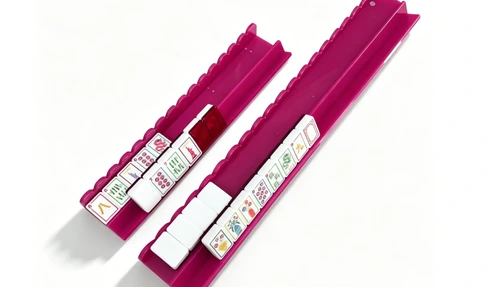
A mahjong pusher is used to reposition the stacked walls of tiles. Its straight edge helps move several stacks together, which is more convenient than reaching across the table to adjust each one. Some pushers are hinged to the rack and can be extended when needed, while others are separate pieces that players pick up when moving a wall. Both serve the same purpose, although their handling and storage differ.
These accessories are especially common in American Mahjong, where players use racks to manage their concealed hands and display exposed tiles. For a typical four-player game, each player has a rack, often accompanied by a pusher.
How to Set Up and Use Mahjong Racks and Pushers
Before a game begins, players need to arrange their racks, construct the walls, and move the tiles into position. These steps work together: a properly positioned rack provides enough room for the wall, while evenly stacked tiles make the pusher easier to control.
Step 1: Position the Racks Around the Table
Start by placing one rack along each player's side of the table. The sloped section should face its owner, allowing the tiles to stand upright without revealing their faces to the other players. The rack should also sit within comfortable reach. If it is pushed too close to the edge, arranging a hand can become awkward; if it is too far away, the player may need to lean forward throughout the game.
Leave enough space behind the rack for the wall and for any movement required during setup. Players using hinged pushers should also check that the arms have room to extend without interfering with neighboring racks.
Step 2: Build the Tile Walls
A standard American Mahjong game uses 152 playing tiles, divided equally among four players when building the walls. Each player constructs a row of 19 stacks, with two tiles in each stack, creating a wall of 38 face-down tiles.
To build the wall, arrange 19 tiles in a straight line and place a second row directly above them. Keep the stacks close together, with the upper tiles resting securely on those beneath them. The completed wall stands along the back of the rack, facing the center of the table.
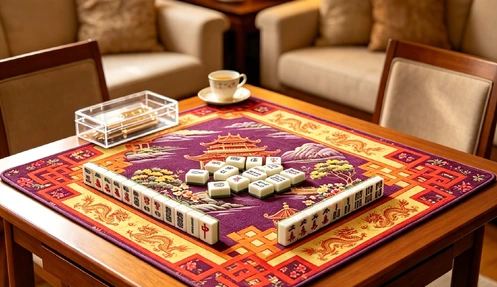
Before proceeding, check that all four walls are straight and stable. A leaning stack can affect neighboring tiles when the wall is moved. If your set includes spare or blank tiles beyond the standard playing configuration, remove them before dividing the tiles for the walls.
Step 3: Move the Wall with the Pusher
With the walls built, players can use their pushers to bring the tiles into position. An attached pusher can be extended from the rack, while a separate one is placed against the outer edge of the wall. In either case, the pusher should make contact along the row rather than pressing against just a few stacks.
Guide the wall forward at a controlled pace, keeping both ends aligned as the tiles move. If the wall begins to curve or an individual stack becomes unstable, stop and straighten it before continuing. A flat Mahjong mat provides a more consistent surface for sliding tiles, while wrinkles or uneven areas can interrupt their movement.
Step 4: Position the Wall for Drawing Tiles
The walls are initially arranged around the center of the table, forming the playing area from which tiles will be dealt and drawn. After East rolls the dice, the wall is broken according to the applicable American Mahjong rules.
As part of serving the wall, East moves the right end of the relevant wall outward at roughly a 45-degree angle, making the tiles easier to access during dealing. Later, as a wall becomes active for drawing, players may need to adjust its position so the next tiles remain within reach.
The position changes according to the stage of the game and which section of the wall is being used, so there is no need to push every wall completely into the center. Once the required movement is complete, return the pusher to its resting position or place it away from the drawing area.
How to Use a Mahjong Rack During American Mahjong Play
After the deal, the rack becomes part of everyday gameplay. In addition to supporting the player's hand, it separates concealed tiles from publicly displayed combinations and plays a role in certain actions defined by American Mahjong rules.
How Should You Arrange Your Concealed Tiles?
At the beginning of a standard hand, East has 14 tiles, while the other three players each have 13. These tiles belong in the sloped portion of the rack, where their faces remain visible only to the player holding them.
Some players prefer grouping tiles by suit and number, while others arrange them according to possible combinations on the current American Mahjong card. Neither approach is required by the rules, so the best arrangement is one that allows you to recognize useful patterns without constantly moving the tiles.
During the Charleston, the rack also helps players review their remaining tiles after selecting those they intend to pass. Keeping a consistent arrangement can make changes in the hand easier to follow while maintaining the privacy of concealed tiles.
Where Should Exposed Tile Combinations Be Placed?
When a player claims a discarded tile to complete a permitted exposed combination, the grouping is displayed on the upper ledge of the rack. For example, if a discard completes a valid pung, the three matching tiles are placed together where the other players can see them.
Additional exposures should remain distinct rather than forming one continuous line of tiles. This makes each declared combination easier to identify and prevents confusion with the concealed tiles held in the sloped section.
Keeping exposed and concealed tiles in their designated areas ensures that other players can see the combinations that have been declared without gaining information about the rest of the hand.
What Does “Racking a Tile” Mean?
In American Mahjong, racking a tile refers to a particular action that can affect whether another player may still claim the most recently discarded tile. A drawn tile is considered racked when the player places it fully into the sloped section of the rack and releases it. Simply touching or tapping the rack with the tile does not complete this action.
Players have a limited window of opportunity to claim a discard. Once the next player draws from the wall and properly racks that tile, the opportunity to claim the previous discard closes. For example, if you draw a tile but decide to discard one already in your hand, you must first rack the newly drawn tile before making your discard.
Racking is not required before every possible action. Immediately discarding the drawn tile, declaring Mah Jongg, or initiating a Joker exchange can also close the claim window under the applicable rules. Understanding these distinctions helps players recognize when a discard is no longer available and avoid disagreements during play.
What Are Common Mistakes When Using Mahjong Racks and Pushers?
Most problems involving racks and pushers arise from uneven tile placement, unsuitable accessories, or restricted space around the playing area. Recognizing the cause makes it easier to correct the issue without repeatedly interrupting the game.
1. The Wall Becomes Uneven During Movement
If one end of the wall moves faster than the other, the row may begin to curve. This often happens when the pusher is not parallel to the tiles or when several stacks were already misaligned. Instead of forcing the wall forward, straighten the affected section and reposition the pusher so the pressure is distributed more evenly.
2. Tiles Lean or Slip Out of the Rack
Not all mahjong tile racks accommodate the same tile dimensions. A narrow groove may not support thicker tiles properly, while an unsuitable angle can make taller tiles unstable. If tiles repeatedly lean forward or fail to sit securely, examine the rack's usable groove width and support profile rather than assuming the problem lies in how the player arranges the tiles.
3. Attached Pushers Obstruct the Playing Area
A hinged pusher left extended can interfere with players reaching for tiles, particularly when the active wall is close to the rack. Returning the arm to its resting position after moving the wall helps keep the playing area accessible. Separate pushers can be placed nearby without leaving them in the path of drawing or discarding tiles.
4. Exposed Groupings Are Difficult to Read
When several exposed combinations occupy the upper ledge, their tiles may appear to run together, making it harder for other players to distinguish the declared groupings. Leaving a small gap between combinations improves visibility, particularly later in a hand when more tiles have been exposed.
Are Mahjong Racks and Pushers Necessary for American Mahjong?
Racks are standard accessories in American Mahjong, but pushers are not strictly required. Players can reposition a wall carefully by hand, although a pusher provides a more convenient way to move several stacked tiles together. A complete four-player setup typically includes four racks and, when pushers are supplied, four pushers.
Compatibility becomes particularly important when accessories and tiles are purchased separately. American Mahjong tiles vary in thickness, height, and width, so a rack designed for one collection may not support another comfortably. The usable groove, overall rack length, and pusher configuration should all be considered when combining different accessories.

The same consideration applies to custom Mahjong sets. Symphony Acrylic manufactures custom acrylic Mahjong tiles based on customer-provided artwork and specifications, allowing tile dimensions and intended accessory requirements to be considered during the design review. This helps ensure that the finished tiles are suitable for the racks and playing arrangement intended for the set.
Conclusion
Using mahjong pushers and racks becomes easier with a properly arranged table, stable tile walls, and accessories that fit the tiles. Understanding how to organize concealed and exposed tiles also helps players avoid confusion during American Mahjong games. To match racks and pushers with tiles of the right dimensions, explore our acrylic mahjong tiles.
For businesses developing custom American Mahjong sets, tile dimensions and rack compatibility are worth considering early in the production process. Symphony Acrylic specializes in custom acrylic Mahjong manufacturing based on customer-provided designs and specifications. If you have artwork ready for a custom Mahjong project, contact our team to discuss your requirements and request a quotation.
Frequently Asked Questions About Mahjong Racks and Pushers
Can You Play American Mahjong Without Pushers?
Yes. Pushers make it easier to move stacked walls, but they are not mandatory. Players can reposition the tiles carefully by hand, provided they keep the stacks aligned and avoid disturbing nearby tiles.
Can American Mahjong Racks Hold Chinese Mahjong Tiles?
Some can, depending on the dimensions of the tiles and the rack design. Chinese Mahjong tiles are often larger or thicker than American-style tiles, so check the groove width, support angle, and usable rack length before combining them.
Are Attached or Separate Mahjong Pushers Easier for Beginners?
Both designs can be suitable for beginners. Attached pushers stay connected to the rack and are less likely to be misplaced, while separate pushers allow more flexibility in positioning. The better choice depends on the rack construction and how comfortably the player can move the wall.
Can a Separate Mahjong Pusher Be Replaced Without Buying a New Rack?
In many cases, yes. Separate pushers are independent accessories and can often be replaced individually. Before selecting a replacement, make sure its length and shape are suitable for the existing rack and tile wall.
Table of Contents