How to Test Custom Mahjong Tile Designs Before Production
October 30, 2026
Read:1
Source: Dongguan XingfenglinAcrylic Products Co., Ltd
A beautifully designed mahjong set can attract attention at first glance, but its real appeal becomes apparent during a game. Players need to recognize tiles quickly, arrange them comfortably, and enjoy the artwork without having to figure out what each symbol means.
For brands developing custom mahjong tiles, a physical sample offers an opportunity to see how original designs perform beyond product photography. A few rounds of play can reveal issues that are easy to miss when reviewing individual tiles, from confusing illustrations to accessories that do not work well together.
Quick Answer
The most effective way to test custom mahjong tiles is to let people familiar with the intended game play with a complete sample set. Observe whether they can recognize and handle the tiles comfortably, identify problems that repeatedly interrupt play, and review any necessary changes before approving the design for bulk production.
What Should You Test in a Custom Mahjong Tile Sample?
Looking at individual samples can tell you whether the colors and illustrations are attractive, but it reveals little about how the collection performs as a whole. Mahjong involves constant movement and quick decisions, making an actual playing session a more useful way to evaluate the finished design.
1. Can Players Recognize Tiles During a Game?
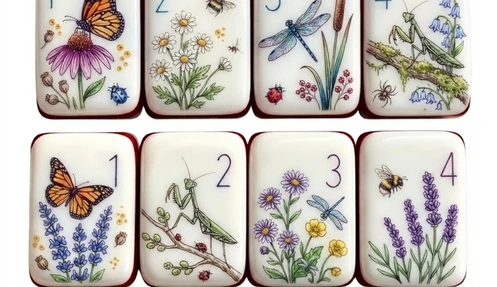
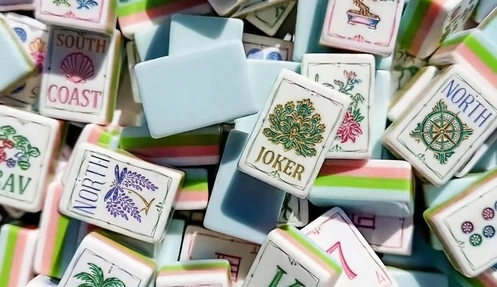
Custom artwork often gives familiar mahjong symbols a new appearance. A traditional Bamboo tile might feature botanical illustrations, while Jokers and Flowers may follow an entirely original theme. These variations create a distinctive collection, but players should still be able to distinguish the tiles without repeatedly stopping to interpret them.
Watch what happens as players draw, arrange, and discard tiles. If someone frequently examines a particular illustration more closely or mistakes it for another tile, there may be a problem worth investigating. A design that is perfectly recognizable on its own can become less obvious when surrounded by dozens of other pieces.
2. Are the Tiles Comfortable to Handle?
Players pick up and move mahjong tiles throughout a game, so the physical experience matters as much as the artwork. The tiles should feel manageable when building walls, arranging a hand, or moving pieces across the table.
Pay particular attention to collections with unusual dimensions or thicker constructions. Larger tiles may offer more space for decorative artwork, but they can also change how much room a hand occupies on a rack. Testing the actual combination of tiles and accessories is more useful than judging their sizes separately.
3. Does the Complete Collection Work Together?
A complete sample reveals how different tile designs interact during normal play. Two illustrations may look distinct when photographed individually yet appear surprisingly similar when mixed into a hand. Decorative elements that seem subtle on one tile can also become visually distracting when repeated across an entire set.
Use the same racks, pushers, and playing surface that customers are expected to use. This brings the experience closer to a real game and makes it easier to identify whether a problem comes from the artwork, the tile construction, or the accessories.
How Can Brands Get Meaningful Feedback From Mahjong Players?
People who designed a collection already understand its symbols and visual choices. Someone encountering it for the first time sees only the finished tiles. That difference is useful: unfamiliar players can reveal issues that the design team may no longer notice.
For an American Mahjong collection, a normal four-player session is a practical starting point. Choose participants who understand the game and allow them to play without explaining every illustration beforehand. Their natural reactions will tell you more than a demonstration in which they already know which designs to pay attention to.
1. Observe What Happens During Play
Rather than interrupting players with frequent questions, pay attention to moments when the game slows down unexpectedly. A player may hesitate over a Joker, rearrange several tiles to identify a symbol, or have trouble handling a full rack.
Make a brief record of what happened and which tile was involved. After the game, ask the player to explain the difficulty in their own words. This avoids turning the session into a series of leading questions and makes the observations easier to interpret.
Usability research from the Nielsen Norman Group emphasizes realistic tasks and direct observation as ways to identify problems that participants may not mention in general feedback. The same approach can be applied to a physical tabletop product: what happens during use matters as much as what people say afterward.
2. Consider Who Will Actually Use the Collection
A mahjong set designed for experienced club players may be judged differently from one intended as a gift or for teaching newcomers. Regular players may notice small interruptions in gameplay, while beginners can reveal whether unfamiliar designs make learning more difficult.
The setting also affects the experience. A collection intended for weekly games should remain comfortable through an extended session, whereas a limited-edition decorative set may place greater emphasis on its visual theme. These differences do not make one design better than another; they help determine what successful testing should look like for the intended customers.
Which Player Feedback Should Lead to Design Changes?
Players will not agree on every aspect of a new collection. Some prefer traditional symbols, while others enjoy elaborate illustrations and unusual colors. Trying to accommodate every opinion can remove the character that makes a design distinctive.
The more useful question is whether feedback points to a recurring difficulty or simply reflects personal taste. One player disliking a floral theme does not necessarily justify a redesign. Several experienced players repeatedly confusing the same two tiles, however, suggests a problem that could affect the collection's usability.
| Feedback From Testing | How to Interpret It | Possible Next Step |
|---|---|---|
| Several players mistake the same tiles for each other | A recurring recognition problem | Review those specific illustrations |
| Tiles are uncomfortable on the intended racks | A compatibility or handling concern | Recheck the tile and accessory combination |
| Players disagree about the decorative theme | Different personal preferences | Consider the collection's target audience |
| Handling becomes uncomfortable during longer games | A practical issue that may not appear immediately | Review the physical sample |
| Players use the set without recurring difficulties | The tested design is functioning as intended | Retain the successful elements |
A single serious problem may still deserve attention, even if other participants did not encounter it. For example, a tile that consistently slips out of a particular rack could indicate a compatibility issue rather than a matter of preference.
When changes are necessary, focus on the elements connected to the problem. Redesigning the entire collection because two illustrations are difficult to distinguish may introduce new issues without improving the rest of the set. Testing the revised pieces again provides a clearer basis for deciding whether the change worked.
When Is a Custom Mahjong Tile Design Ready for Production?
A design does not need universal praise to be ready for manufacturing. It needs to perform reliably for its intended audience while maintaining the appearance and character the brand wants to deliver.
Once significant playing difficulties have been addressed, the brand can review the final sample as a complete product. That includes the tile designs, physical construction, and any accessories being supplied as part of the collection. If a revision affects how the tiles fit or function, the updated sample should be checked under the same conditions that revealed the original problem.
The approved sample then becomes the reference for the manufacturing order. Keeping it together with the final specifications allows both the brand and manufacturer to work from the same agreed product rather than relying on photographs or earlier design versions.
For retail collections, this reference is also useful when evaluating the completed order or preparing a repeat production run.
FAQs About Custom Mahjong Tile Testing
Are decorative mahjong tiles harder to use than traditional tiles?
Not necessarily. Decorative tiles can be just as enjoyable to play with when their symbols remain easy to identify. Problems are more likely when unfamiliar illustrations make different tile types look too similar. Testing the designs during an actual game is more useful than judging their readability from product photos alone.
Do expensive custom mahjong tiles offer a better playing experience?
A higher price does not automatically mean better gameplay. Material quality, comfortable handling, tile recognition, and compatibility with accessories all influence the experience. Premium artwork may add visual appeal, but the finished set should also be practical for its intended players.
Will custom mahjong tiles fit standard racks and pushers?
Not always. Mahjong tiles and accessories vary in size, and some racks are designed for particular tile dimensions. Before production, test the finished tile samples with the racks and pushers your customers are likely to use, especially when developing oversized or unusually thick tiles.
Should beginners or experienced players test a new mahjong design?
Ideally, include players who represent your intended customers. Experienced players are better positioned to identify interruptions to normal gameplay, while beginners can provide useful feedback on unfamiliar symbols and overall ease of use. If the collection targets both groups, testing them separately can reveal different needs.
Conclusion
A custom mahjong collection should be enjoyable at the table, not just attractive in photographs. Playing with a complete sample helps brands discover whether their design choices work as intended and which details deserve another look before production.
Symphony Acrylic manufactures custom acrylic mahjong tiles from customer-provided artwork and specifications. If you are developing an original collection, share your designs and project requirements with our team to discuss sample manufacturing and bulk production. Request custom mahjong tile samples to test your designs before production.
Contact us to discuss your custom mahjong tile project.
References
1. Nielsen Norman Group — Task Scenarios for Usability Testing https://www.nngroup.com/articles/task-scenarios-usability-testing/
2. Nielsen Norman Group — Usability Testing 101 https://www.nngroup.com/articles/usability-testing-101/
Table of Contents