How to Manufacture Mahjong Tiles? A Complete Manufacturing Guide
October 19, 2026
Read:1
Source: Dongguan XingfenglinAcrylic Products Co., Ltd
This guide explains the main mahjong tile manufacturing process, from material preparation and tile forming to engraving, printing, polishing, quality control, and final assembly.
What Are Mahjong Tiles Made Of?
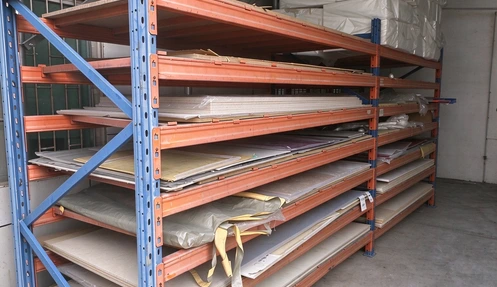
Material determines how a Mahjong tile can be formed, decorated, and finished. Modern commercial sets commonly use acrylic or melamine, while resin is used for some decorative designs. Traditional and collectible sets may also use materials such as bone and bamboo.
| Material | Typical Formation Method | Common Decoration |
|---|---|---|
| Acrylic | Sheet cutting, machining, or molding | Engraving, color filling, UV printing |
| Melamine | Compression molding | Engraving and color filling |
| Resin | Casting | Molded details, printing, or surface decoration |
| Bone & Bamboo | Cutting, shaping, and joining | Carving and coloring |
For manufacturing purposes, these differences matter more than appearance alone. A multi-layer acrylic construction requires different preparation and equipment from a molded melamine body.
This is why there is no universal answer to how to manufacture mahjong tiles. The production route starts with the selected material and tile structure.
Are Mahjong Tiles Molded or Cut?
Both methods are used in Mahjong manufacturing. Molding forms the tile body inside a mold, while cutting creates individual pieces from prepared sheet material. Which route is used depends largely on the material and tile construction.
1. Molded Mahjong Tiles
Melamine Mahjong tiles are commonly formed through compression molding. Prepared molding material is placed into a shaped cavity and processed under controlled heat and pressure until the tile body takes form. After demolding, excess material around the edges can be removed before the piece moves to later production stages.
Because the external shape is established inside the mold, tile length, width, thickness, and corner profile are closely tied to the tooling. A different tile format may therefore require corresponding tooling changes rather than simply changing a cutting dimension.
2. Cut Mahjong Tiles
Sheet-based acrylic mahjong tiles begin with acrylic prepared in the required thickness, color, and layer structure. Individual tile blanks are cut from the sheet according to the specified dimensions, allowing the material construction to be established before each tile takes shape.
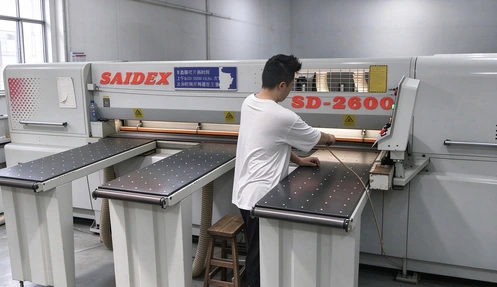
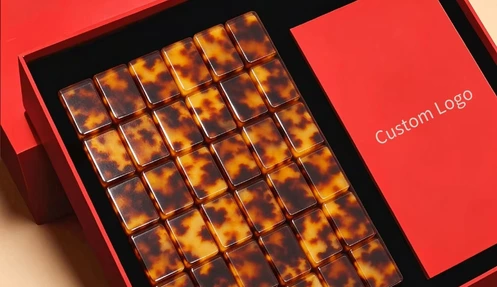
This is also the production route used for many custom sets at Symphony Acrylic. For clear, colored, pearl-effect, tortoise-pattern, or multi-layer acrylic, the sheet itself contributes to the final appearance of the tile. Cutting therefore has to account for more than length and width: material thickness, layer alignment, cutting position, and the consistency of the exposed side profile all influence how the finished pieces look together as a set.
How Are Mahjong Tiles Manufactured Step by Step?
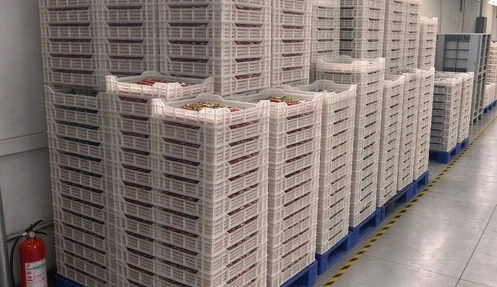
After the material and construction are decided, a Mahjong set moves through a series of controlled production stages. The details vary with the product, but the workflow has to keep two things aligned throughout: the physical consistency of the tiles and the correct combination of designs in the finished set.
Step 1 — Confirm the Tile Specifications
Before material enters production, the set needs a clear specification covering tile size, thickness, material, colors, artwork, quantity, accessories, and packaging.
Just as important is the tile configuration. Chinese, Japanese, and American Mahjong do not necessarily use the same combination of pieces. Flowers, Seasons, Jokers, red fives, blanks, and custom designs all need to be accounted for. For an original collection, the factory will usually work from a tile list that identifies each design and its required quantity, giving both production and later set assembly a common reference.
Step 2 — Prepare the Tile Blanks
The approved dimensions and material specifications are then used to produce the individual blanks. These pieces establish the physical foundation of the set before any face artwork is added.
With sheet-based acrylic, attention is paid to thickness, color, layer structure, and dimensional consistency across the batch. Small differences become easier to notice when dozens of finished pieces are stacked or lined up together, so uniformity at the blank stage reduces problems later in production.
Step 3 — Shape and Finish the Tiles
Newly formed blanks can still carry sharp edges, cutting traces, or an unfinished surface. Grinding, edge rounding, flat polishing, and tumbling are used as needed to bring them closer to their final form.
The target is not simply a shinier tile. Edge profile affects how the pieces feel when shuffled, while surface flatness and dimensional consistency influence how neatly they sit together. Finishing therefore has to balance smooth handling with a stable, uniform shape across the set.
Step 4 — Add the Tile Artwork
The prepared tiles are matched with their approved face designs. Depending on the collection, these may range from conventional Characters, Dots, Bamboos, Winds, and Dragons to Flowers, Jokers, illustrations, logos, or entirely original graphics.
Each design must correspond to the correct tile and quantity in the production list. This becomes especially important for themed sets in which many pieces have unique artwork rather than repeated traditional symbols. Engraving, color filling, printing, and other decoration methods can then be selected according to the artwork itself.
Step 5 — Build the Complete Mahjong Set
Finished pieces are sorted by design and counted against the approved configuration before packaging. Here, the concern shifts from the appearance of one tile to whether the collection works as a complete set.
A correct total count is not enough. One missing Flower paired with an extra duplicate, for example, still leaves the set incomplete. The same applies to custom Jokers or other unique pieces. Matching the final contents against the original tile list helps catch these configuration errors before the tiles, accessories, and packaging are brought together.
How Are Designs Put on Mahjong Tiles?
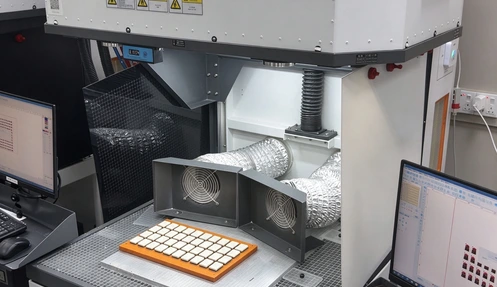
Mahjong face designs are commonly produced through engraving and color filling, UV printing, or laser marking. Each process creates the artwork differently and supports a different level of detail.
1. Engraving and Color Filling
Engraving cuts Characters, Dots, Bamboos, Winds, Dragons, or custom graphics into the tile face. Pigment is then worked into the recessed areas, and the surrounding surface is cleaned to reveal the finished design. Because the color sits within the engraved pattern, the artwork has visible depth rather than appearing only on the surface.
The main limitation is scale. Fine strokes can lose definition when reduced to the size of a Mahjong tile, and narrow gaps between colors leave less room for clean filling. Engraving depth also has to suit the artwork: bold symbols can tolerate stronger recesses, while intricate graphics require more control to keep small details readable.
2. UV Printing
Mahjong tile printing is better suited to artwork with illustrations, gradients, fine details, or multiple colors arranged closely together. Instead of cutting the graphic into the material, UV printing builds the image directly on the tile surface.
This preserves details that would be difficult to translate into engraved lines and opens more possibilities for themed Flowers, Jokers, logos, and other original artwork. Tile color and transparency can influence the final appearance, particularly with clear or colored acrylic, so the artwork and base material need to be considered together rather than as separate elements.
3. Laser Marking
Laser marking creates graphics by altering a controlled area of the tile surface without adding a separate layer of ink or color fill. It works particularly well for fine lines, small identifiers, and simple graphics where precise marking is more important than a multicolor effect.
The result depends on how the material reacts to the laser. Contrast, depth, and surface texture can vary between different acrylic compositions and finishes, which limits the range of visual effects that can be achieved compared with full-color printing.
A custom set can also combine processes—for example, engraved playing symbols with printed artwork on selected Flowers or Jokers—when the designs require different levels of detail.
How Are Mahjong Tiles Polished and Finished?
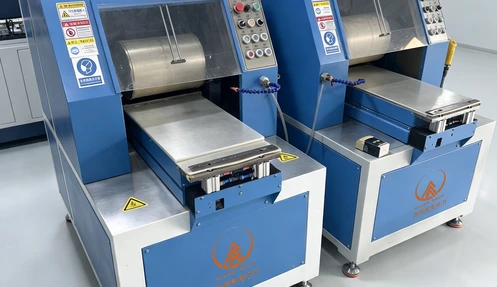
After cutting, acrylic tile blanks still show traces of machining around the faces and edges. Finishing gradually removes these marks while bringing the tile closer to its intended surface clarity, edge profile, and handling feel. For the acrylic sets produced at Symphony Acrylic, this usually involves several finishing operations rather than one polishing step.
1. Flat Polishing
Flat polishing works on the broad faces of each tile, where fine cutting or machining marks can be particularly visible on clear, translucent, pearl-effect, and layered acrylic.
At Symphony Acrylic, the surface is refined while keeping the original tile dimensions and flat profile under control. This matters with transparent materials because even light scratches can remain visible through the acrylic, while uneven polishing can affect how the faces align when the tiles are placed together.
2. Edge Rounding and Tumbling
The edges require a different treatment. Newly cut acrylic has a sharper profile, so the corners and sides are gradually softened through grinding, rounding, and tumbling until they reach the intended shape.
For multi-layer tiles, the edge is also where the internal construction becomes visible. An uneven side can interrupt the layer lines or make one section appear thicker than another. This is something Symphony Acrylic pays particular attention to when finishing layered designs, where the side profile is part of the visual character of the tile rather than a hidden surface.
3. Cleaning After Polishing
Fine acrylic dust and polishing residue can remain on the tile after finishing, especially around edges and small surface details. Cleaning removes this material before the pieces move forward in production.
Clear and light-colored acrylic make residue particularly easy to notice. Once the surface is clean, scratches, small chips, or incomplete edge finishing are also easier to identify.
Conclusion
Mahjong tile manufacturing varies with the material, construction, and artwork required for each set. Beyond forming the tile itself, details such as edge finishing, decoration methods, and accurate set configuration all influence the final product. For a closer look at material and finish options, explore our acrylic mahjong tiles.
For brands developing custom acrylic Mahjong tiles, having clear specifications and finished artwork makes it easier to move from an idea to production. If your designs are ready, contact Symphony Acrylic to discuss material options, tile specifications, and manufacturing requirements for your project.
Frequently Asked Questions About Mahjong Tile Manufacturing
1. What Information Should I Provide Before Manufacturing Custom Mahjong Tiles?
Start with the tile size, material, total tile count, artwork, colors, required quantity, and packaging requirements. A clear tile list is also important for custom sets because it shows which designs are needed and how many pieces of each should be produced. If your collection includes unique Flowers, Jokers, or other special tiles, identify them separately in the artwork files.
2. Can I Manufacture Mahjong Tiles Using My Own Artwork?
Yes. Custom Mahjong tiles can be produced from customer-supplied artwork, provided the files are suitable for the intended manufacturing process. Details such as line width, graphic size, color areas, and placement may need to be checked before production. Symphony Acrylic works from supplied drawings and artwork rather than creating an original Mahjong collection without design files.
3. What Tile Sizes Can Be Manufactured for a Custom Mahjong Set?
Tile dimensions can vary according to the intended Mahjong format, product design, and material construction. Instead of relying on a universal standard size, buyers should specify the required length, width, and thickness for their project. These dimensions should be confirmed before material preparation and cutting begin.
4. Can One Mahjong Set Use Different Artwork on Every Tile?
Yes. A custom collection can contain repeated traditional symbols, unique Flowers, different Jokers, illustrations, branded graphics, or other original designs. The important production requirement is a clear relationship between each artwork file and the required tile quantity. This helps prevent missing or duplicated designs when the complete set is assembled.
5. Can Different Acrylic Colors or Layers Be Used in Mahjong Tile Production?
Yes. Acrylic tiles can use different body colors and, depending on the construction, multiple layers to create a distinctive side profile or visual effect. Clear, solid-color, pearl-effect, tortoise-pattern, and layered materials can produce very different appearances, so the material structure should be established as part of the product specification.
6. Do Custom Mahjong Tiles Need a Sample Before Bulk Production?
A physical sample is useful for custom projects where the finished appearance depends on material, dimensions, engraving, printing, color, or edge finishing. It allows these physical details to be reviewed together before the bulk order proceeds, particularly when the design uses original artwork or a custom acrylic construction.
Table of Contents