Acrylic vs. Glass: Which Is Better for Your Project?
December 19, 2025
Read:73
Source: Dongguan XingfenglinAcrylic Products Co., Ltd
In this guide, we’ll break down the key differences between acrylic and glass in a clear, practical way—from safety and weight to clarity, scratch resistance, heat performance, and customization—so you can confidently pick the best option for your project or display case.
Acrylic vs. Glass Quick Comparison
Feature | Acrylic | Glass |
Impact / Safety | Shatter-resistant, safer on impact | Can shatter into sharp pieces |
Weight | Much lighter | Heavier |
Clarity | Very good (museum-grade is close) | Crisp, high clarity |
Scratch Resistance | Scratches more easily (coatings can help) | More scratch-resistant |
Heat Resistance | Lower (can warp with heat) | Higher heat stability |
What Is Acrylic?
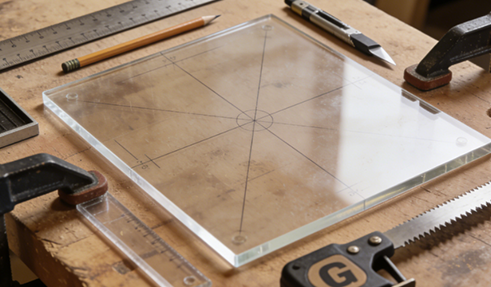
Acrylic—also known as PMMA—is a clear plastic often called “plastic glass” because it delivers a similar transparent look, but with very different performance in real use. It’s much lighter than glass and far less likely to shatter, which is why it’s widely used in places where safety matters. Acrylic is also easy to work with: it can be cut, bent, and shaped without the complexity that glass usually requires, making it a strong choice for custom designs and large panels.

Some acrylic grades even offer UV filtering to help protect artwork or products from light exposure. The main tradeoff is the surface—acrylic can scratch more easily than glass, but with the right coatings and gentle cleaning habits, it can stay clear and polished for a long time.
What Is Glass?
Glass is a silica-based material most people know in its everyday form as soda-lime glass, with tempered and laminated versions often chosen when added safety is important. It’s valued for its sharp, crisp clarity, a hard surface that resists scratching, and strong heat and sun stability—which is why it remains a classic choice for windows and other long-term, high-wear applications. The main tradeoffs are weight and how it fails: glass is heavier than acrylic, and standard glass can break into sharp shards. Tempered glass is engineered to break into smaller, less hazardous pieces, while laminated glass includes an inner layer that helps keep the panel together if it cracks.

Side-by-Side Comparison: Acrylic vs. Glass
Impact / Safety
For an acrylic display case, safety is often the biggest advantage. Acrylic is far less likely to shatter, and if something goes wrong it typically cracks rather than breaking into sharp pieces. A glass display case can be safe too, but in practice that usually means tempered or laminated glass—both of which add weight and cost. For public spaces or homes with kids/pets, acrylic is often chosen simply because accidents are easier to manage.
Weight
Acrylic is significantly lighter, which matters if you’re using a larger case, stacking units, mounting a display, or shipping frequently. A glass display case feels more substantial, but that added weight can require sturdier shelves, stronger frames, and more careful handling during transport and setup. Weight also affects shipping costs and the risk of damage in transit—heavier glass tends to demand stronger packaging and more cautious handling.

Clarity & Glare
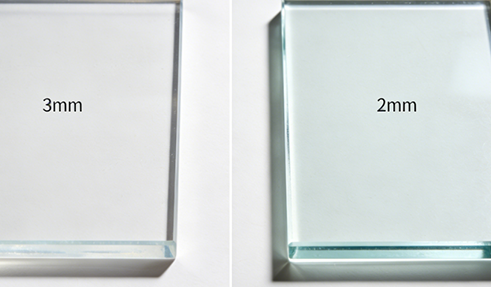
Glass usually delivers the cleanest, most “crisp” view with minimal visual distortion—one reason it’s a classic for premium displays. Acrylic can still look excellent, especially in higher-grade sheets, but depending on thickness and lighting, an acrylic display case may show slightly more glare or optical effects at certain angles. If your display lighting is strong, adding anti-reflective film or adjusting the light position can make a noticeable difference with either material.
Scratch Resistance
This is where glass wins. A glass display case holds up better to daily wiping and general wear because the surface is harder. Acrylic scratches more easily, though good habits (soft microfiber cloths, non-abrasive cleaners) and optional coatings can help keep an acrylic display case looking polished. In practical terms, acrylic is often best when you can minimize frequent wiping—or when you can accept light surface wear over time.
Heat Resistance
Glass is the more stable option near heat—it won’t soften or warp the way plastics can. Acrylic is more sensitive, so it’s not ideal near heaters, stoves, or other high-heat sources. If your display will sit in a warmer environment, a glass display case is usually the safer bet. Acrylic is still perfectly fine in normal indoor conditions, but prolonged heat exposure is where it’s most likely to show issues.
UV / Weathering
Many acrylic sheets can be selected with UV-filtering in mind, which is useful when you’re protecting prints, collectibles, or products that fade. That said, for long-term exposure, UV-stabilized grades matter. Glass handles sunlight well, and UV control typically comes from coatings, films, or specialized glazing depending on the application. If your display sits near a sunny window, choosing UV protection up front can preserve colors and reduce aging of the item inside.
Fabrication & Customization
If you need a custom look, acrylic is typically easier to work with. A display acrylic case can be cut, drilled, bent, and shaped into more unique designs without the same limitations. Glass can be customized too, but more complex shaping is harder, and lead times and costs often climb faster. Acrylic also makes it easier to add practical details—like cable pass-throughs, vents, or stepped bases—without compromising the overall design.
Cost Considerations
Pricing depends on size, thickness, safety requirements, and finishing. Acrylic can be more cost-effective for large, lightweight builds or custom shapes, while glass often delivers stronger long-term value when scratch resistance and heat stability are priorities. At the high end, both an acrylic display case and a glass display case can become premium products once you add thicker panels, coatings, and higher finishing standards. One more thing to factor in: installation and shipping—acrylic can be cheaper to move and mount, while glass may cost more upfront but stay looking “new” longer in high-touch environments.
When to Choose an Acrylic Display Case
When safety matters most
If the display will sit in a kids’ room, a school, a retail aisle, or any space where it could be bumped, a display acrylic case is often the safer option. Acrylic is much less likely to shatter, so everyday knocks are less likely to create sharp, dangerous debris.
When weight is a real constraint
For larger cases, stacked setups, wall-mounted displays, or anything you’ll move or ship, weight quickly becomes a practical issue. Acrylic keeps the build lighter, which reduces stress on shelves and brackets—and makes packing, carrying, and transport far easier.
When the design needs more than straight panels
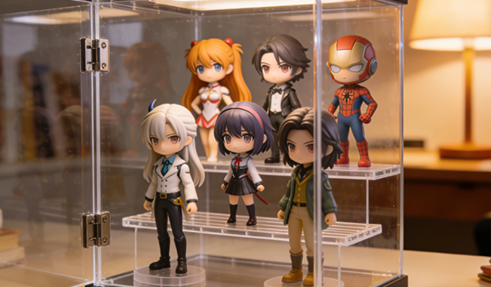
If your case requires curves, stepped tiers, tight openings, cable pass-throughs, or other functional details, acrylic gives you more flexibility. It can be cut, drilled, and formed more easily, so you can get a large acrylic display case that fits both the item and the way you want to use it—not just a standard box.
When light protection is part of the goal
For artwork, prints, collectibles, or products that can fade, UV-filtering acrylic can help reduce light-related damage while still keeping the display clean and clear. It’s especially useful in bright rooms, storefronts, or near-window setups.
When you’re scaling up size or coverage
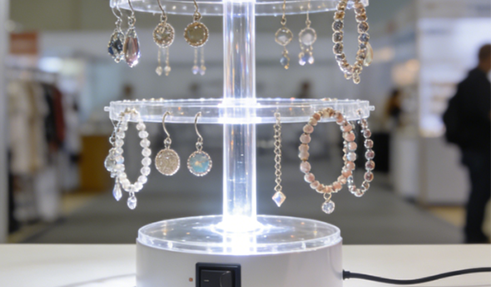
For oversized displays or large installations, acrylic often becomes the more workable choice. It’s simpler to handle and install at scale, and depending on thickness and finishing, it can deliver a premium look with fewer logistical headaches than glass.
When to Choose a Glass Display Case
When scratch resistance needs to hold up long-term
If you’ll be wiping the surface often or the case will see regular contact, a glass display case usually stays looking “new” longer. Glass is harder, so it’s less likely to pick up the fine swirls and light marks that can slowly build up in busy spaces.
When the space is hot, bright, or sun-facing
Glass handles heat and long hours of sunlight more comfortably than acrylic. If your display sits near a window, under strong lighting, or in a warmer room, glass is less likely to change over time, which makes it a reliable choice for fixed setups.
When you want the cleanest, most natural view
If your goal is for the case to “disappear” and let the item be the focus, glass is hard to beat. It typically delivers the crispest, most neutral clarity, which is why it’s often preferred for premium displays and window-style viewing.
When it’s a permanent, high-traffic installation
For setups that will stay in one place—especially in retail or public environments—glass tends to be the more low-fuss option. It tolerates frequent cleaning and daily use well, making it a solid fit for long-term installations.
When moisture or chemicals are part of the environment
For aquariums, humid areas, or settings that involve frequent cleaning products or chemical exposure, glass often has the advantage. It’s stable, resistant, and generally more predictable in demanding conditions.
Conclusion
There’s no single “best” choice—only the best fit for your situation. If you want something lighter, safer, and easier to customize, acrylic is often the smarter route. If your priority is scratch resistance, heat stability, and the crispest long-term clarity, glass usually wins. Use your environment and usage habits as the deciding factor, and you’ll end up with a display that not only looks right on day one, but still looks great years later.
Table of Contents