American vs. Chinese Acrylic Mahjong Tiles: What’s the Difference?
March 9, 2026
Read:1332
Source: Dongguan XingfenglinAcrylic Products Co., Ltd
In this guide, we’ll break down the key differences between American vs. Chinese acrylic mahjong tiles in a practical, buyer-friendly way, so you can choose a set that matches your rules, your setup, and your players.
American vs. Chinese Acrylic Mahjong Tiles Key Differences at a Glance
Feature | American acrylic mahjong tiles | Chinese acrylic mahjong tiles |
Tile count | 152 (NMJL-style: includes 8 jokers) | 144 (traditional baseline) |
Jokers | Essential in American play (commonly 8 for NMJL-style) | Typically not used (some export sets may add them) |
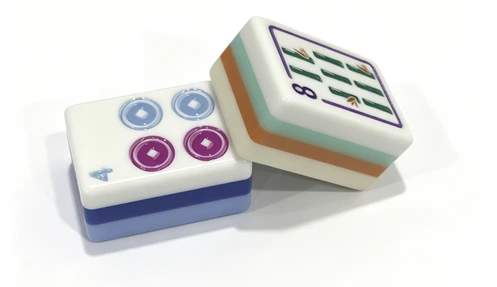
Tile thickness/shape | Often thinner / more “domino-like” (fits racks) | Usually thicker, taller (stands without racks) |
Markings (indices) | Usually Arabic numbers + E/S/W/N letters for accessibility | Usually Chinese characters/suit symbols (traditional look) |
Accessories | Often includes 4 racks + pushers (wall building + organized hands) | Usually case/box, racks uncommon |
Best play environment | Clubs, social play with racks, clear visibility for mixed skill levels | Traditional table play, faster handling without racks |
Design style | Often more colorful/thematic to match American card culture | More standardized “traditional” visual language |
Acrylic Mahjong Tiles: Tile Count & Composition (152 vs. 144)
1.Why American Acrylic Mahjong Tiles Sets Are Usually 152 Tiles
If you’re shopping for acrylic mahjong tiles made for American-style play, you’ll most often see a 152-tile set—especially in groups that follow NMJL-style rules. That number isn’t just a packaging choice; it matches the way American Mahjong hands are commonly formed and played.
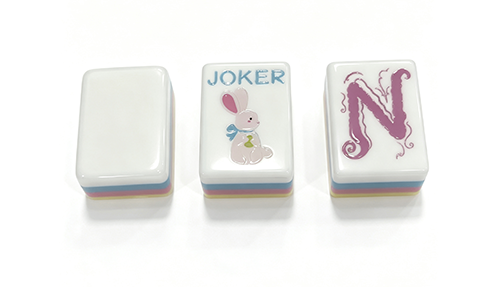
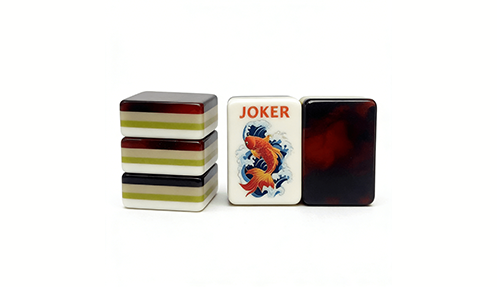
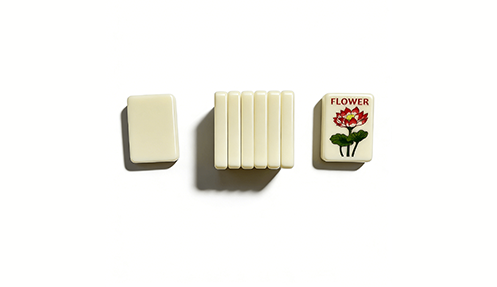
A typical set of American acrylic mahjong tiles includes the standard foundation—the three suits, honor tiles, and flowers—and then adds 8 Jokers. Since Jokers are built into many American hand patterns, they aren’t simply an “extra.” For most American-style games, they’re part of what makes the set feel complete and playable as intended.
Real-world buying tip: Some American sets of acrylic mahjong tiles also come with extra Jokers or blank spare tiles for replacements. That’s great for long-term use, but at the table, most players still treat 152 tiles as the working set, keeping any spares tucked away unless something gets lost.
2.Why Chinese Acrylic Mahjong Tiles Sets Are Usually 144 Tiles
For Chinese acrylic mahjong tiles, 144 is the most common baseline you’ll encounter. Traditional Chinese-style sets are built around three suits plus honor tiles, and may include flowers/seasons depending on the regional rules. Because most Chinese variants don’t depend on Jokers as a core mechanic—and the tiles are typically designed to stand upright without racks—the standard count generally stays consistent at 144.
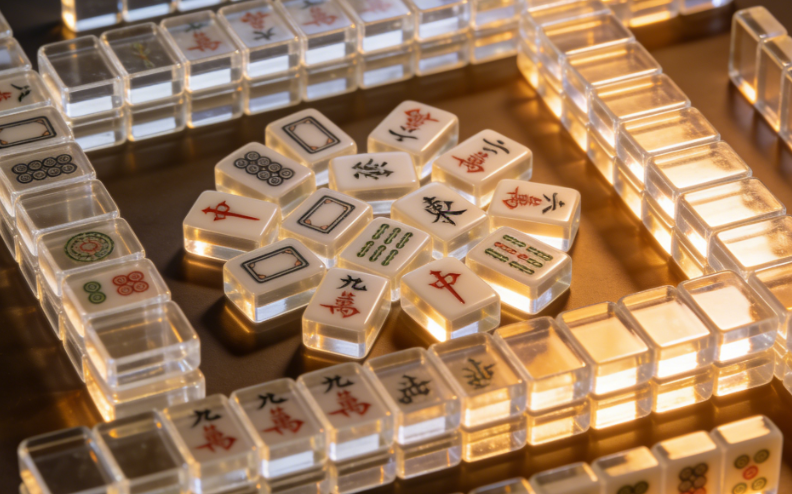
Why you might see 146 or 148 online: Some “Chinese-style” acrylic mahjong tiles are listed with slightly higher numbers because sellers include spare tiles, add optional flower/season variations, or bundle extras for export markets. To avoid surprises, don’t rely on the headline count alone—check the full contents list before you buy, ideally broken down by category (suits, honors, flowers/seasons, plus any extras).
Acrylic Mahjong Tiles Size, Thickness & Ergonomics (Real-World Handling Differences)
1.How Thinner Acrylic Mahjong Tiles Feel on Racks (American-Style Play)
In American-style games, thinner acrylic mahjong tiles are simply a better match for racks. They slide into the groove cleanly, line up evenly, and stay easy to scan—so you spend more time thinking about your hand and less time nudging tiles back into place. Over long club sessions, that rack-friendly shape also feels easier on the hands: you’re not constantly gripping, re-spacing, or re-stacking just to keep things readable.
Shuffling is another moment where the difference shows up quickly. Thinner acrylic mahjong tiles tend to “wash” faster and spread out smoothly across the table. The trade-off is what happens when you take the racks away—slimmer tiles can feel a bit more slippery and less stable when stood upright, especially on glossy tables or tablecloths with low friction.
2.What Thicker, Taller Acrylic Mahjong Tiles Change (Stand-Alone Chinese-Style Handling)
With Chinese-style play, thicker and taller acrylic mahjong tiles are designed to be handled directly and to stand securely on their own. They’re easier to pinch and lift, and they feel more planted when you’re building walls—particularly on smooth or slightly uneven surfaces where lighter tiles might shift. In everyday play, the added thickness often means fewer accidental tip-overs and a steadier pace as hands move around the table.
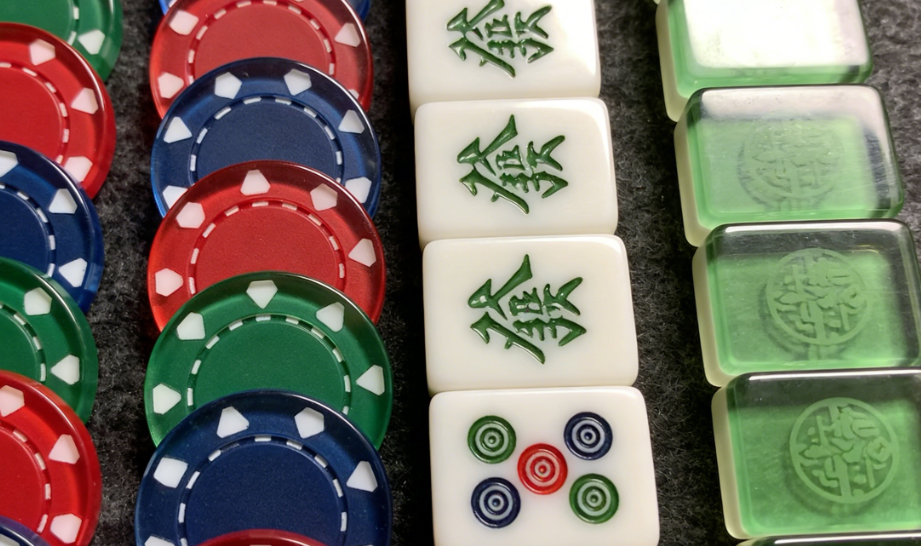
There’s also a sensory difference that players notice right away. Heavier acrylic mahjong tiles usually create a firmer, more satisfying “click,” and the extra weight helps the tiles stay put when the table gets busy—whether you’re drawing quickly, rearranging a hand, or bumping the wall by accident.
3.Mini“Chart”Block: Choosing Acrylic Mahjong Tiles by How You Play
Rather than chasing a single“best”size, it’s more useful to pick acrylic mahjong tiles that fit your setup and your group’s habits. If racks are part of your game (as they typically are in American Mahjong), a thinner profile keeps hands tidy and readable. If you play without racks (common in many Chinese variants), thicker/taller tiles are easier to control and naturally more stable. And when you’re teaching—or playing with mixed experience levels—legibility becomes the priority: high-contrast faces, clear indices, or bilingual legends can make the whole table run smoother.
4.Quick chooser (visual callout):
Play with racks→go with thinner acrylic mahjong tiles (rack-friendly profile)
Play without racks→choose thicker/taller acrylic mahjong tiles (stand-alone stability)
Teaching/mixed groups→prioritize readability (high contrast, clear indices, or bilingual legends)
Mahjong Sets Acrylic Markings & Readability (Indices Matter More Than You Think)
1.American Indices (Arabic Numbers + Western Letters)
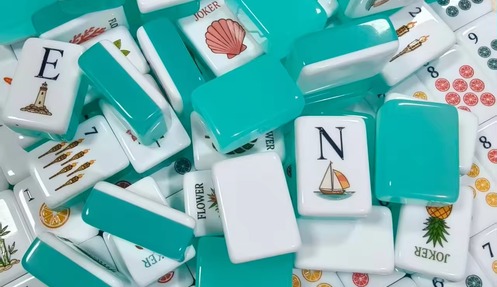
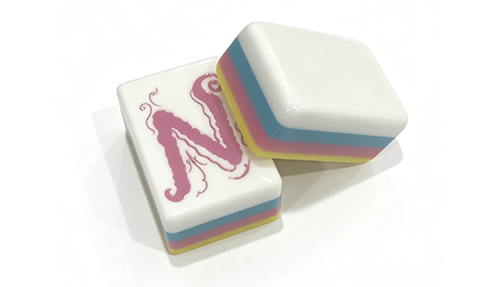
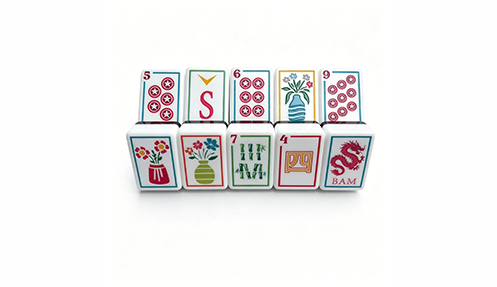
With American-style mahjong sets acrylic, you’ll usually see small corner indices—Arabic numbers for the suits and E/S/W/N for the winds. They’re there for speed: in club or social games, they help English readers recognize tiles at a glance and keep the flow moving.
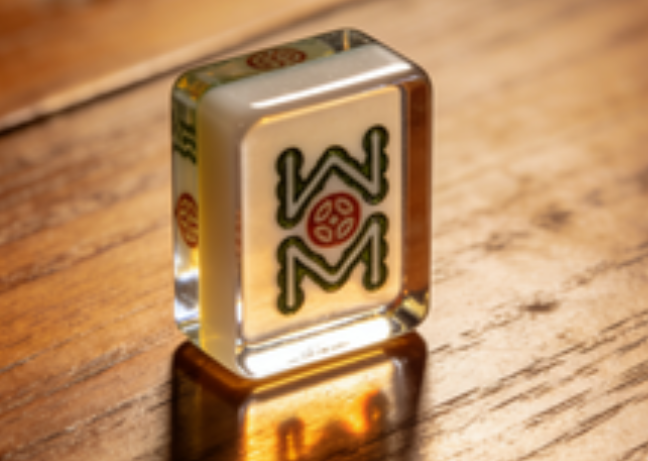
2.Chinese Traditional Faces (Characters + Suit Icons)
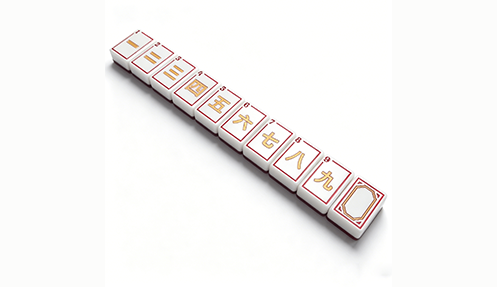
Most Chinese-style mahjong sets acrylic stick to the traditional faces—Chinese characters and suit icons—which many players prefer for the classic look and familiar visual language.
Material Quality in Mahjong Acrylic Sets
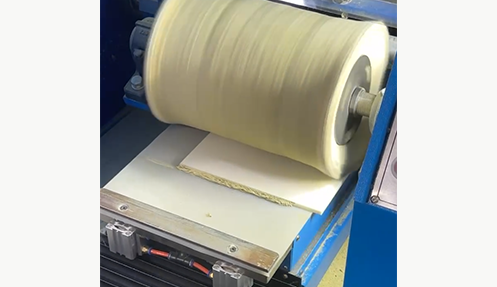
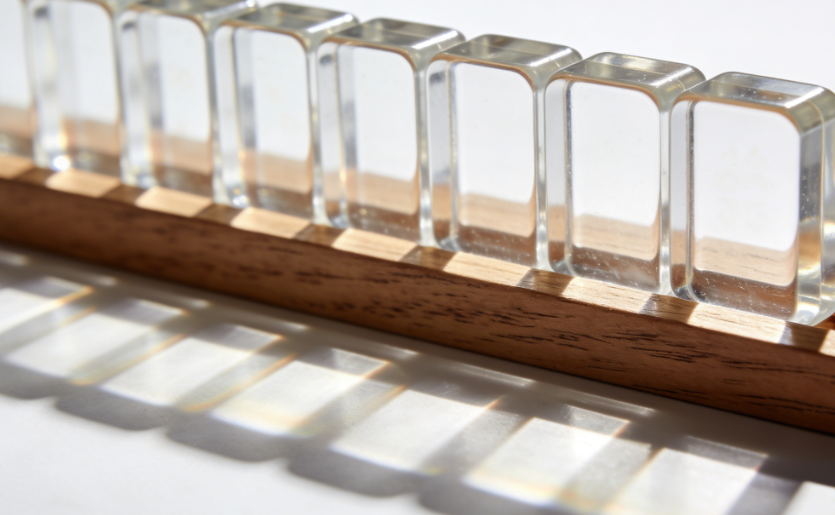
When you’re comparing mahjong acrylic sets, you can spot quality pretty quickly—even without any special tools. Start with clarity: good acrylic looks clean and bright, not milky or hazy. Next, run your fingers along the edges. Tiles with sharp corners or rough seams can get uncomfortable in longer games, while a subtle micro-bevel feels smoother and easier to handle. Then look closely at the faces: deeper engraving generally holds up better over time, and a good color fill should look even rather than patchy. Consistency is the final tell—tiles should stack flat, build straight walls, and feel uniform enough that shuffling stays balanced. If surface options are available, a protective finish can also help improve scratch resistance and keep the set looking newer.
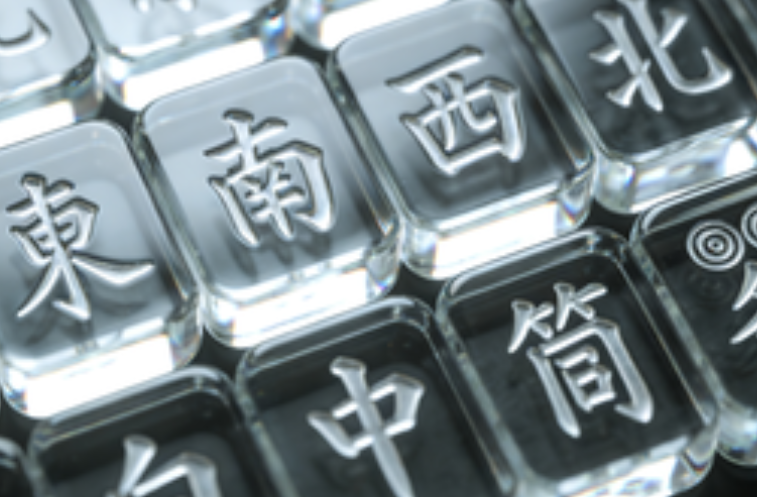
As a practical trust reference, at Symphony Acrylic we focus on the real-play details that make mahjong acrylic sets feel right at the table—not just look good in photos. We start with precision-cut PMMA and careful polishing so the tiles stay clear, smooth, and comfortable in hand. On the face side, we use deep engraving paired with UV-stable color fill to help designs stay crisp and legible over time, and we finish with micro-beveled edges so the tiles handle cleanly during long sessions.
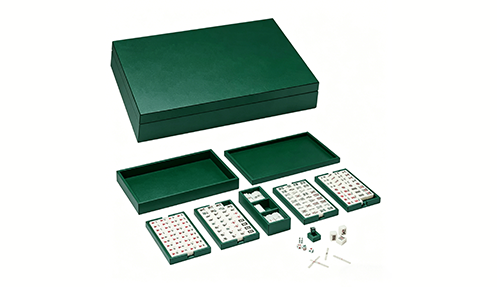
We also build with consistency in mind, aiming for tight, repeatable tolerances so tiles stack evenly, walls align neatly, and the set delivers that satisfying, consistent“click”players notice immediately. For brands, clubs, or gift programs, we offer flexible customization—bilingual legends, custom backs/icons, and tailored layout choices—so the set matches your audience and playing style. And if you want a complete kit rather than tiles alone, we can bundle coordinated accessories like racks, pushers, organizers, and storage packaging to create a ready-to-play set from day one.
Read more:
https://www.gdxflin.com/blog/how-do-i-choose-an-acrylic-mahjong-set.html
https://www.gdxflin.com/blog/what-is-the-difference-between-melamine-and-acrylic-mahjong-tiles.html
Conclusion
If you’re sourcing a set built for real gameplay and long-term use, Symphony Acrylic can help you customize and package acrylic mahjong tiles that suit your audience, whether it’s for club play, gifting, or branded kits.
Table of Contents
September 10, 2026
Pearl, Tortoise, Transparent or Solid: Which Acrylic Mahjong Finish Fits Your Collection? View
details
View
details
September 7, 2026
What Is the Prettiest Mahjong Set? Exploring Luxury Mahjong Set Designs View
details
View
details